
400 Watt Solar Panels 12V 18BB
4.4Editor score
25% high efficiency cells
IP68 waterproof certification
11 AWG copper wiring
Grade A+ N-Type cells
This guide compares the top 400 Watt Solar Panels for Rvs based on efficiency durability portability and real world performance to help you choose the right
Finding reliable power for your recreational vehicle is essential for comfortable off-grid living. A quality 400 Watt Solar Panel system can provide enough energy to run appliances lights and electronics without needing shore power or a noisy generator.
We have carefully evaluated the leading models available in the market today. Our comparison focuses on critical factors like cell technology efficiency ratings weather resistance and compatibility with various battery systems and charge controllers.
Each product in this list offers unique advantages depending on your specific camping needs and budget. Please note that product availability and pricing may change over time so always verify current details before making your final purchase decision.
4.4Editor score

4.8Editor score
4.5Editor score
The following table provides a side-by-side overview of the top ten models evaluated in this guide. It highlights key specifications such as efficiency ratings cell types and specific features to help you quickly identify the best fit for your RV setup.



This solar panel stands out as one of the most cost-effective options using advanced N-Type technology. It holds a solid rating from users who appreciate its high efficiency and durable construction for long-term use.
We may earn a commission when you buy through this link, at no additional cost to you.
The use of 18BB busbar technology significantly reduces resistance and heat generation which improves overall power transmission. The IP68 certified junction box ensures that water and dust cannot compromise the internal wiring even in harsh weather.
While the junction box is well-sealed the panel is designed as a permanent mount rather than a portable solution. This trade-off is acceptable for RV owners who need a fixed roof setup with reliable performance over many years.
Buyers looking for a balance between premium cell technology and budget pricing will find this model compelling. It provides a strong foundation for any 12V system requiring consistent energy generation without breaking the bank.
The N-Type cells outperform traditional P-Type options by offering higher efficiency and better resistance to light-induced degradation for longer lifespan.
Constructed to withstand 2400 Pa wind pressure and 5400 Pa snow loads this panel ensures safety and reliability in extreme outdoor conditions.
We may earn a commission when you buy through this link, at no additional cost to you.
This model earns the top spot due to its exceptional efficiency and innovative bifacial design that captures light from both sides. Users rate it highly for its ability to generate more power even when partially shaded or in high heat.
We may earn a commission when you buy through this link, at no additional cost to you.
The TwinCell anti-shade technology splits the panel into independent halves ensuring that if one part is blocked the other continues producing power. This is a massive advantage for RVs parked under trees or near tall structures.
Installation requires careful placement to maximize rear-side gain from reflective surfaces like gravel or snow. While slightly more expensive than standard panels the increased energy harvest justifies the investment over the system's life.
It is ideal for full-time van lifers or RV owners who need maximum reliability and output. The robust warranty and high performance make it the best choice for those prioritizing efficiency above all else.
By capturing reflected sunlight on the rear the panel can produce up to 30% more power than traditional opaque models in optimal conditions.
With a low temperature coefficient of -0.3% per degree it maintains stable output even on the hottest days when other panels lose significant efficiency.
We may earn a commission when you buy through this link, at no additional cost to you.
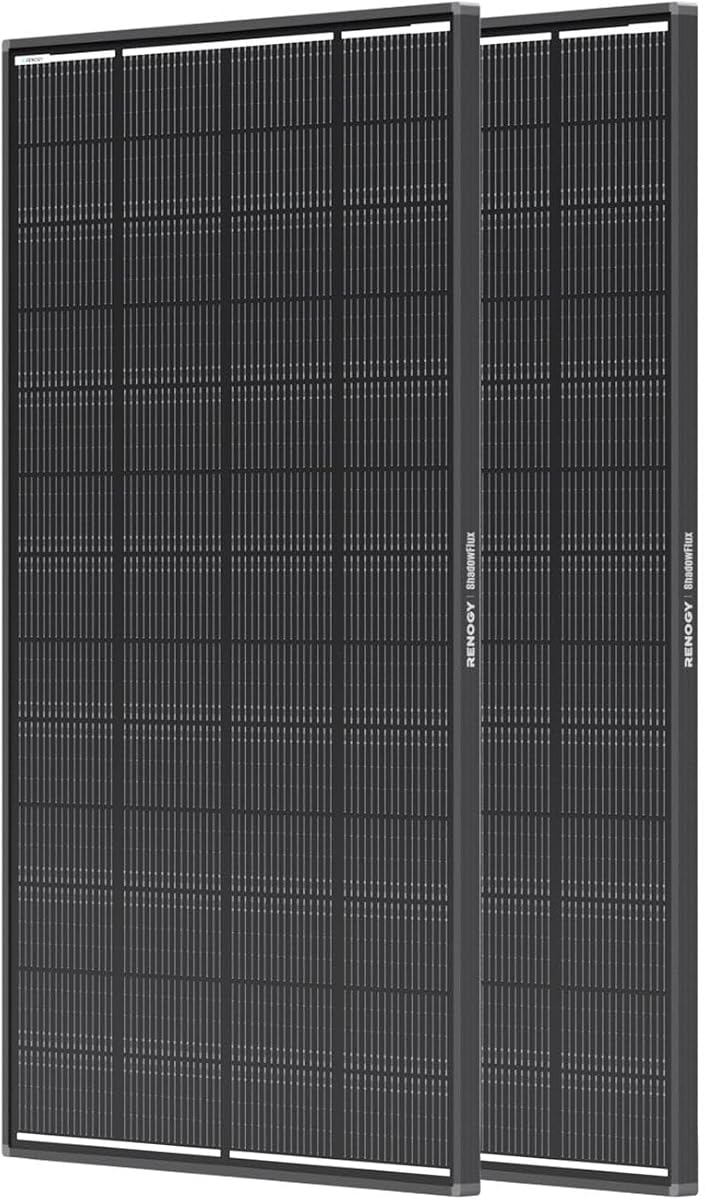
Renogy has long been a trusted name in RV solar and this ShadowFlux model continues that legacy with advanced N-Type cells. It is designed to mitigate power loss from shadows ensuring consistent energy flow throughout the day.
We may earn a commission when you buy through this link, at no additional cost to you.
The ShadowFlux anti-shading technology is particularly effective at reducing hot spot risks which can damage panels over time. Combined with a compact design it fits well on smaller roofs where space is at a premium.
Although the warranty terms are slightly shorter than some competitors the build quality and performance are exceptional. Users appreciate the reliable power generation even under less-than-ideal weather or shading conditions.
This panel is the best choice for those who prefer a premium brand with proven support and quality assurance. It delivers high efficiency and durability for travelers who need peace of mind.
The innovative ShadowFlux design significantly reduces the impact of partial shading ensuring that your system keeps producing power even with obstacles.
With a profile that is 7% smaller than standard panels it maximizes roof usage allowing for more flexibility in placement on smaller vehicles.
We may earn a commission when you buy through this link, at no additional cost to you.
This panel is designed for practical installations where cable length is a primary concern. The 3-meter leads eliminate the need for extensions and reduce potential connection points which minimizes failure risks in the field.
We may earn a commission when you buy through this link, at no additional cost to you.
It uses standard monocrystalline technology which provides reliable performance for general RV use. The pre-drilled holes align well with common Z-brackets making physical installation straightforward for DIY enthusiasts.
The rating is slightly lower than some high-end models but it remains a solid workhorse for budget builds. The long leads are a significant advantage for routing power to controllers located far from the panel.
Ideal for setups where you need to reach distant controllers without extra wiring costs. It is a practical choice for those who value convenience and straightforward installation over maximum efficiency.
The built-in 3m leads save time and money by removing the need for extra connectors and extension cables during the wiring process.
With a tempered glass face and aluminum frame it offers durable protection against rain and splashes suitable for permanent outdoor mounting.
We may earn a commission when you buy through this link, at no additional cost to you.
This kit offers flexibility by providing two smaller panels instead of one large rigid unit. This layout is perfect for irregular roof spaces where a single 400W panel might not fit due to vents or antennas.
We may earn a commission when you buy through this link, at no additional cost to you.
The 23% efficiency rating is strong for this price point and the bifacial design adds extra potential for power gain when placed over reflective surfaces. Users value the ease of handling the individual 200W modules.
While the junction box has a lower IP rating than top models it is sufficient for standard RV travel conditions. The ability to install panels separately allows for better weight distribution on the roof.
Best for RV owners with limited roof space who need modular installation options. The compact size and high efficiency make it a versatile choice for diverse camping environments.
Breaking the 400W total into two 200W modules allows for easier transport and installation in tight or irregular roof spaces.
Engineered to maintain stable power output on cloudy days this ensures you stay charged even when sun conditions are less than perfect.
We may earn a commission when you buy through this link, at no additional cost to you.
This unit is designed primarily for portable ground use with power stations rather than permanent roof mounting. Its foldable design makes it easy to carry and deploy whenever extra charging is needed during trips.
We may earn a commission when you buy through this link, at no additional cost to you.
The 23% conversion rate ensures it captures sunlight efficiently while the adjustable kickstand allows for optimal angle alignment. It is a great backup option when stationary camping requires more power than fixed panels provide.
Users appreciate its compatibility with major power station brands and its robust weather resistance for outdoor use. While less convenient than roof panels it offers unmatched flexibility for mobile power needs.
Ideal for campers who travel with portable power stations and need a backup charger. Its portability and ease of use make it a valuable addition to any outdoor gear.
The foldable design and lightweight construction allow you to set up power generation anywhere without being tied to your vehicle's roof.
Intelligent chip technology protects your devices from over-voltage and short circuits ensuring safe charging even in variable conditions.
We may earn a commission when you buy through this link, at no additional cost to you.
This portable panel excels at charging solar generators thanks to its versatile cable connections and robust design. The high conversion rate ensures rapid charging even in less than ideal sun conditions for efficient power use.
We may earn a commission when you buy through this link, at no additional cost to you.
With four adjustable kickstands it provides excellent stability on uneven ground which is critical for reliable energy harvest. The durable carrying handle makes transport simple for users who move frequently.
While the junction box is not fully waterproof the surface is rated IP65 against splashes making it suitable for dry camping. Users find it a reliable companion for off-grid power needs outside the vehicle.
Buyers prioritizing portable power generation will find this model highly effective. Its balance of efficiency portability and ease of use makes it a top choice for ground charging setups.
The four kickstands provide a stable base on uneven ground ensuring the panel stays oriented correctly for maximum sunlight capture.
Offering up to 23.5% efficiency it delivers significant energy output relative to its size for quick power station replenishment.
We may earn a commission when you buy through this link, at no additional cost to you.
This panel stands out for its high efficiency ETFE coating and IP67 waterproof rating which provides superior weather resistance compared to standard PET models. It ensures long-term durability and consistent performance in harsh environments.
We may earn a commission when you buy through this link, at no additional cost to you.
The included multi-port adapter kit allows it to connect directly to a wide variety of power stations without extra cables. This convenience saves time and reduces clutter for users with multiple devices.
Its sturdy construction and three-angle kickstand system provide reliable performance during outdoor use. The waterproof rating gives confidence for use in varied weather conditions without worry.
Ideal for users who need a durable universal connector solution for different power stations. The high efficiency and waterproofing make it a reliable choice for serious outdoor power needs.
With an IP67 rating the panel withstands water immersion and heavy rain ensuring safety and longevity in wet environments.
The variety of included connectors makes it compatible with almost any portable power station brand reducing the need for extra adapters.
We may earn a commission when you buy through this link, at no additional cost to you.
This model offers the flexibility of four separate 100W panels which can be installed anywhere on the RV roof to fit around obstacles. It combines this modularity with high-efficiency N-Type technology for excellent performance.
We may earn a commission when you buy through this link, at no additional cost to you.
Each small panel is lightweight and easy to handle which simplifies installation for DIY users. The N-Type cells ensure that output remains high even in hot climates where standard panels might degrade.
The IP68 protection rating ensures that the connection points stay safe from water ingress during heavy rain. This level of protection is essential for reliable long-term energy production in all weather.
Best for those needing to distribute panels across a complex roof layout. The efficiency and waterproofing make it a strong choice for full-time travelers seeking reliable power.
The four separate panels allow you to fit solar around vents and antennas maximizing usable roof space on larger vehicles.
With a low temperature coefficient this panel maintains high efficiency during hot summer days when others might lose power.
We may earn a commission when you buy through this link, at no additional cost to you.
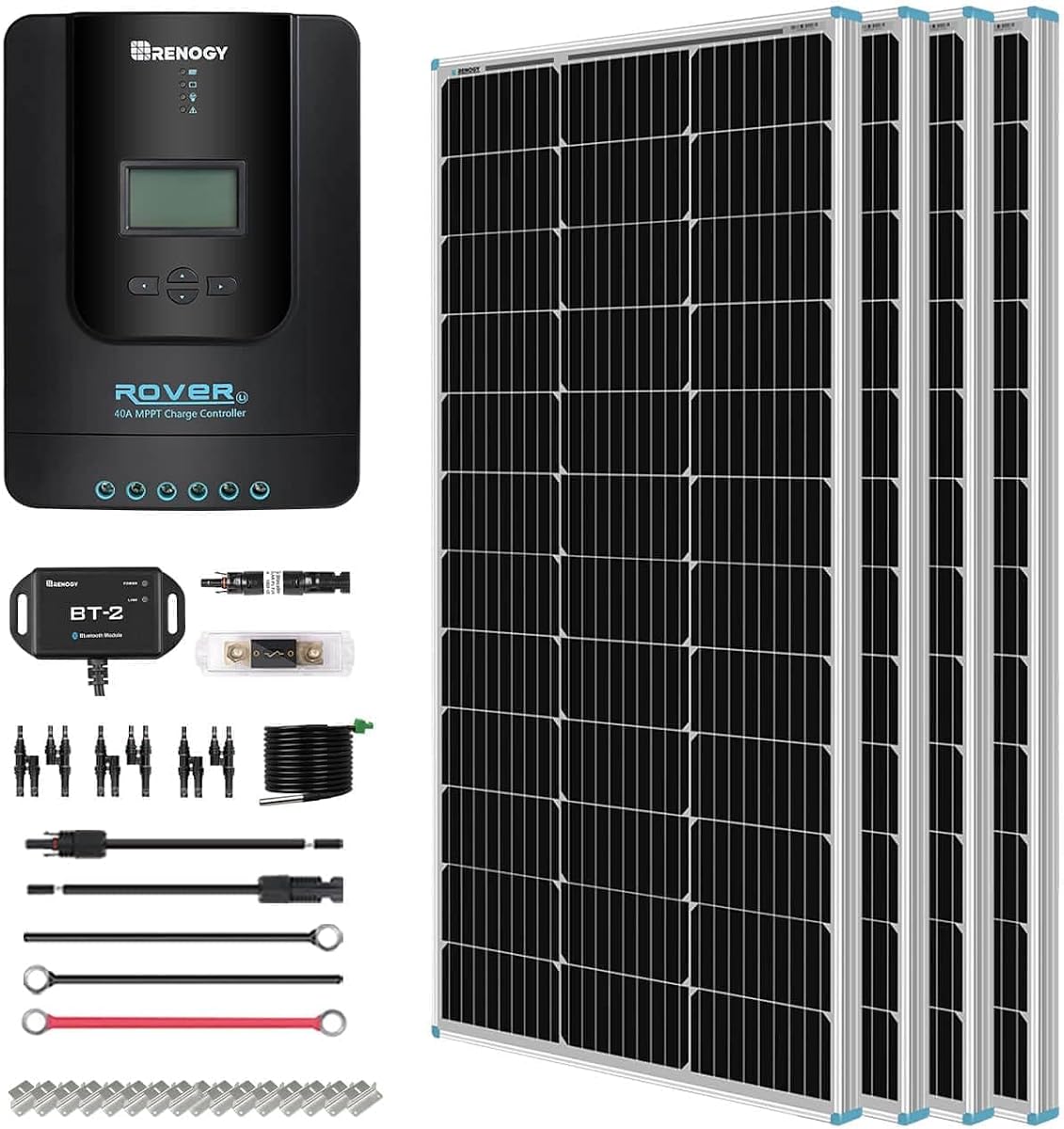
This kit provides everything needed to get started with solar power on your RV including a high-quality MPPT charge controller. It removes the complexity of sourcing compatible parts and ensures a seamless installation process.
We may earn a commission when you buy through this link, at no additional cost to you.
The included 40A MPPT controller optimizes power delivery to your batteries ensuring you get the most out of every solar panel watt. It is a robust solution for 12V and 24V systems.
While the total cost is higher than buying panels alone the included components are high quality and reliable. This makes it a convenient choice for those who want a complete plug-and-play experience.
Ideal for beginners or those who prefer a fully integrated system. The premium components and trusted brand make it a reliable long-term investment for your power needs.
By including all necessary wiring and controllers this kit simplifies the setup process for users new to RV solar systems.
The MPPT controller intelligently tracks power to ensure maximum efficiency and battery safety under all charging conditions.
We may earn a commission when you buy through this link, at no additional cost to you.
Choosing the right solar panel for your RV involves balancing efficiency durability and installation needs. This guide breaks down the critical factors to help you make an informed decision that suits your lifestyle.
Solar panels are made with different types of cells that impact how much electricity they generate from sunlight. Monocrystalline cells are generally the most efficient and space-saving which makes them ideal for RV roofs where every square foot matters. Newer N-Type cells offer even better performance especially in high heat and low light compared to older P-Type options.
Look for panels with efficiency ratings above 22% to maximize your energy output without taking up too much roof space. Higher efficiency means you can get more power from fewer panels which is crucial for smaller vehicles.
An RV is constantly exposed to sun rain snow and wind so the panel must be rugged enough to handle it. Look for aluminum frames that resist corrosion and tempered glass that can withstand hail. The junction box is a critical component that should have at least an IP65 rating to keep water and dust out of the internal wiring.
Higher IP ratings like IP67 or IP68 provide extra protection against heavy storms or accidental submersion. Ensure the panel can withstand wind loads typical for highway driving and snow loads for winter camping.
Consider how you plan to mount the panel before purchasing. Some panels come with pre-drilled holes for Z-brackets which are standard for RV roofs while others rely on adhesive tape for a permanent fix. Portable models offer flexibility but require manual setup each time you stop.
If you have vents antennas or roof mounts check the dimensions to ensure the panels fit around them. Modular kits with multiple smaller panels can be easier to install on complex roofs than a single large sheet.
The length and quality of the cables attached to the panel matter for system efficiency. Short cables may require extensions which add connection points and potential failure risks. Long high-quality cables save you time and money on extra accessories.
Check that the connectors match your existing system. Standard MC4 connectors are widely used but some portable panels use different plugs like Anderson or XT60 which might need adapters for your charge controller.
Decide whether you need a fixed roof panel or a portable one. Fixed panels are convenient for daily power but require professional installation. Portable panels are versatile for ground use with power stations but need setup and teardown at each site.
If you camp in different locations often a portable 400 watt system might offer better flexibility. For full-time travelers a fixed roof setup is usually more reliable and low maintenance.
Solar panels lose efficiency when they get hot which is a common issue for RVs parked in the sun. The temperature coefficient indicates how much power output drops per degree of temperature increase. A lower number is better meaning less power loss in hot climates.
Look for panels with a coefficient around -0.3% or lower to ensure stable performance during summer months. High-quality N-Type cells typically have better temperature ratings than standard options.
A good warranty reflects the manufacturer's confidence in their product. Look for a 25-year performance warranty which guarantees a certain percentage of power output over time. A 10-year material warranty covers defects in construction.
Ensure the company offers responsive technical support in case you have questions about installation or troubleshooting. Reliable support is valuable when dealing with complex electrical systems on the road.
To maximize power output position your solar panels to face south if you are in the northern hemisphere and adjust the angle based on the season. Keep the surface clean of dust debris and bird droppings which can block sunlight and reduce efficiency.
Check all wiring connections regularly for signs of wear or corrosion especially after long trips or exposure to rain. Ensure your charge controller is properly configured for your battery type to prevent overcharging and ensure safe energy storage.
When storing your RV for extended periods consider disconnecting the solar system or using a maintenance charger to keep your batteries topped up. For portable panels fold them carefully to avoid cracking the cells or damaging the frame.
Running an RV air conditioner directly on 400 watts is difficult as AC units often need 1000 watts or more. However combined with a battery bank and inverter it can support short cooling intervals or fans effectively.
A 40A or higher MPPT charge controller is recommended for a 400 watt panel to handle the input current efficiently. Ensure the voltage ratings match your battery system to avoid safety issues.
Installing a fixed panel usually takes one to two hours if you have the necessary tools and roof access. Beginners may want to hire a professional to ensure proper sealing and electrical connections.
Yes but efficiency drops significantly on cloudy days. Modern panels still produce some power in low light but expect around 10% to 25% of their rated output compared to sunny conditions.
Bifacial panels can be worth it if you have reflective surfaces like white roofs or light gravel. They capture light from the back increasing output but standard panels are simpler for most standard RV setups.
Use water and a soft sponge to clean the surface gently. Avoid harsh chemicals or high pressure washers which can damage the sealant and the protective coating on the glass.
Our top picks offer a range of options to fit different needs from budget-conscious buyers to those seeking maximum efficiency. The N-Type 16BB Bifacial model stands out for its advanced technology while the DOKIO and Callsun panels provide excellent value.
When making your choice prioritize durability and efficiency to ensure your system lasts for years of travel. Consider how much roof space you have and whether you prefer a fixed or portable setup.
Remember that prices and availability change frequently so always check the latest product details before buying. Investing in quality solar power will significantly improve your comfort and freedom on the road.