
UGREEN NAS DH2300
4.5Editor score
Energy efficient design
Simple setup process
AI photo organization
Compare the top low power consumption NAS options for home and office use. Find energy efficient storage solutions that save electricity while delivering
Finding a low power consumption NAS is essential for users who want reliable storage without high electricity bills. These devices run efficiently 24/7 while keeping your data safe and accessible from anywhere in your home or office.
We compared ten top models based on processor efficiency, network speed, and storage flexibility. Our list covers everything from entry level units to powerful workstations, helping you choose the right fit for your needs.
Each pick highlights key features like AI photo management, Docker support, and silent operation. Prices may change so always check current listings before buying. We ensure every detail reflects real user needs and technical specifications.
4.5Editor score

4.6Editor score
4.5Editor score
This comparison table shows key specs for all ten models side by side. It helps you quickly see differences in ports, processor type, and storage capacity to find the most efficient solution.


The UGREEN NAS DXP2800 stands out as a top choice for advanced users needing power and efficiency. It scores a 4.5 star rating for its Intel N100 Quad-Core CPU that balances performance with low power draw.
We may earn a commission when you buy through this link, at no additional cost to you.
Its key strengths include 8GB DDR5 RAM and 2.5GbE networking for fast transfers. You can run Docker apps like Plex or Home Assistant while managing your media library smoothly. AI tools organize photos by faces and scenes automatically.
Trade-offs include a higher cost than entry-level models and some initial setup complexity. These are acceptable for users who want more than basic storage. The performance justifies the investment for media creators.
Buy this if you need a central hub for 4K videos and backups. It fits advanced homes wanting one system for photos, files, and surveillance without cloud fees.
Runs Plex or similar apps efficiently with hardware acceleration for smooth streaming.
AI detection features help track events and organize clips locally on your drives.
We may earn a commission when you buy through this link, at no additional cost to you.
The UGREEN NAS DH2300 offers an affordable entry into private cloud storage. It earns a 4.5 star rating for simplifying data backup without complex configuration or hidden costs for new users.
We may earn a commission when you buy through this link, at no additional cost to you.
Its strengths include a simple interface and AI photo tagging. You can store millions of files without cloud subscriptions. The 1GbE port ensures stable speeds for everyday tasks.
It lacks Docker or Wi-Fi support, which limits advanced use. This fits casual users needing backups and file sharing. The lower power draw keeps electric bills low.
Buy this for personal storage needs like photo backups. It suits households wanting one-time cost storage without technical hassles.
Saves money by avoiding recurring fees while keeping your data local and private.
Search photos by faces or objects thanks to built-in AI recognition tools.
We may earn a commission when you buy through this link, at no additional cost to you.
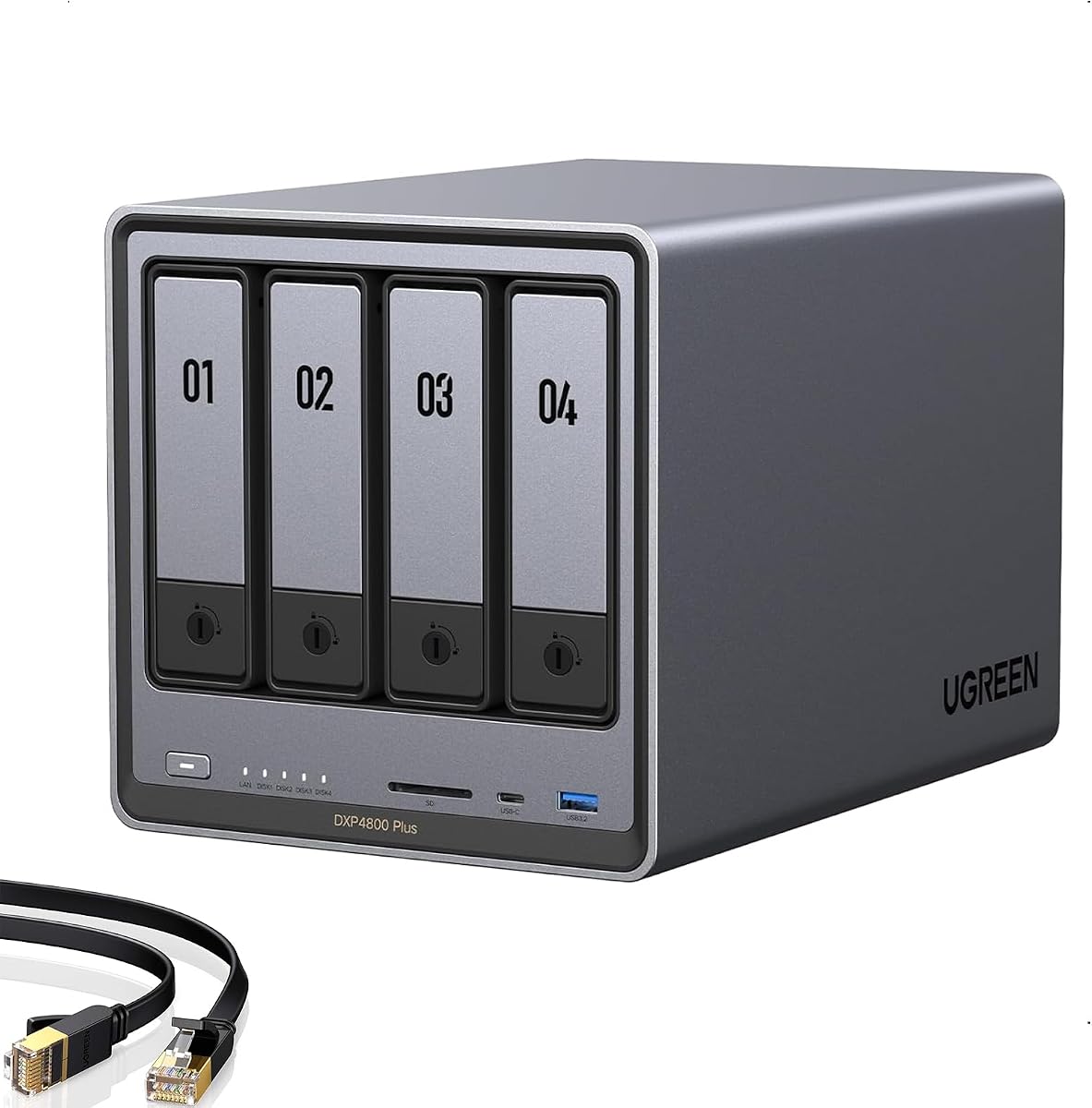
The UGREEN DXP4800 Plus delivers premium speed for teams and creators. It holds a 4.5 star rating for its powerful processor and 10GbE port enabling rapid backups and editing.
We may earn a commission when you buy through this link, at no additional cost to you.
It handles massive workloads with 144TB capacity. Docker support allows custom apps like media servers. Files transfer via USB or network in seconds.
It costs more but offers top performance. The trade-off is worth for users needing speed. Drives are separate so plan your storage carefully.
Buy this for small offices or heavy content work. It keeps your data safe with encryption and flexible access options.
10GbE ports let you edit video directly from the NAS without lag.
Works across all devices so teams stay synced on files anytime anywhere.
We may earn a commission when you buy through this link, at no additional cost to you.
The Synology DS225+ excels for home media streaming. It earns a 4.6 star rating for its Intel CPU with hardware transcoding that plays 4K content smoothly.
We may earn a commission when you buy through this link, at no additional cost to you.
It backs up photos and files automatically to multiple destinations. Security layers protect your data with encryption. You can stream to any device without monthly fees.
Its higher price reflects premium hardware quality. The warranty adds peace of mind. It fits users wanting reliability for continuous access.
Buy this for a personal Netflix-like library. It keeps your media safe with automated backups and strong protection.
Transcodes video in real time so playback is smooth on all devices.
RAID and snapshots prevent loss so you never lose important files.
We may earn a commission when you buy through this link, at no additional cost to you.
The Beelink ME Mini PC offers a compact NAS solution. It holds a 4.6 star rating for its tiny footprint and Intel N95 processor handling daily tasks well.
We may earn a commission when you buy through this link, at no additional cost to you.
It includes a 1TB SSD for instant storage. Dual LAN ports ensure fast networking. Use it as a home theater or file server with 4K support.
It may lack extra bays for large expansion. The compact size suits small desks. Warranty support covers issues for three years.
Buy this for light office or home needs. It saves space while delivering reliable data access.
Takes minimal room on your desk yet runs 24/7 without heat issues.
Includes SSD and OS for immediate use without extra purchases.
We may earn a commission when you buy through this link, at no additional cost to you.
The Beelink ME Mini N150 supports flexible storage with six M.2 slots. It earns a 4.4 star rating for its efficient cooling and silent operation in small spaces.
We may earn a commission when you buy through this link, at no additional cost to you.
It includes 2TB SSD and supports 24TB total. Dual 2.5G LAN ports allow fast networking. Use it for Plex or backups without noise.
Max storage is lower than 5-bay units. The quiet fan suits home offices. OS options let you pick your NAS system.
Buy this for fast SSD-based storage. It fits users needing speed and silence over massive bulk.
M.2 slots deliver quicker speeds than traditional drives for media work.
Vertical airflow keeps noise under 35dB so it runs quietly 24/7.
We may earn a commission when you buy through this link, at no additional cost to you.
The Synology DS223j offers a reliable entry private cloud. It holds a 4.5 star rating for simple setup and automated backups across devices.
We may earn a commission when you buy through this link, at no additional cost to you.
Sync files across platforms easily and monitor with cameras. The hardware ensures stable daily use. Its software keeps data secure with encryption.
Speed is modest but fits typical home use. Two bays allow RAID protection. Updates keep features fresh and safe.
Buy this for basic cloud replacement needs. It fits households wanting easy sync without complexity.
Keep files updated on all devices so you always have the latest.
Add cameras to record property and review footage on your phone.
We may earn a commission when you buy through this link, at no additional cost to you.
The UGREEN DXP4800 GT handles heavy multitasking well. It earns a 4.5 star rating for its AMD Ryzen processor and dual 10GbE ports enabling fast concurrent workflows.
We may earn a commission when you buy through this link, at no additional cost to you.
It supports ECC RAM upgrades for stability. Surveillance Center manages cameras locally. You can expand to Docker or VMs as needed.
Cost and setup time are trade-offs. The performance suits office teams or tech users. Local storage ensures privacy.
Buy this for workloads needing speed and flexibility. It keeps files secure with layered protection.
Dual 10GbE links support fast transfers even with many users accessing data.
Error correction helps maintain data integrity during long runs.
We may earn a commission when you buy through this link, at no additional cost to you.
The MINISFORUM N5 Air brings workstation power to a NAS. It scores a 4.2 star rating for its Ryzen CPU and OCuLink allowing GPU upgrades for heavy tasks.
We may earn a commission when you buy through this link, at no additional cost to you.
It has five HDD bays plus M.2 slots. HDMI supports multi-monitor setups. Network ports include 10GbE and 5GbE for fast links.
It uses more power than mini units. The power suits users needing raw speed and expandability. OS choice can vary.
Buy this for heavy AI or media work. It supports expansion and fast local processing.
OCuLink lets you add a discrete GPU for AI or gaming tasks.
Up to 174TB capacity meets massive file storage needs.
We may earn a commission when you buy through this link, at no additional cost to you.
The BUFFALO LinkStation 210 comes ready to use. It earns a 3.9 star rating for its included drive and simple network setup for shared storage.
We may earn a commission when you buy through this link, at no additional cost to you.
It works as home cloud with SSL encryption. US support helps with setup. You can back up multiple computers easily.
It lacks flexible expansion. The closed system limits third-party apps. It fits basic home use.
Buy this for quick backup with minimal setup. It centralizes files with built-in drives.
Includes 2TB drive so you can start storing data right away.
A closed design reduces app vulnerabilities for safer storage.
We may earn a commission when you buy through this link, at no additional cost to you.
Selecting the right low power NAS depends on your usage needs and budget. Key factors like processor type, drive options, and networking speed determine efficiency.
Low power NAS units often use ARM or low TDP x86 processors. These reduce electricity use while handling basic backup and file sharing. Look for models with sleep modes or efficient cores for daily use.
Choose CPUs designed for NAS tasks to balance speed and power draw.
Barebone NAS units let you add your own drives, affecting overall power consumption. Some come with SSDs which are more efficient than traditional HDDs. Consider how many bays you need for future growth.
Select drive bays that match your storage capacity needs without waste.
Network speed impacts power usage. 2.5GbE or 10GbE ports transfer data faster but may use more energy. For typical home use, 1GbE is sufficient and efficient.
Match network ports to your router and file sizes to save energy.
Efficient software reduces CPU load by optimizing tasks. Features like auto-backup, photo AI, or media transcoding affect power use. Select units with low background processes.
Check software for energy saving modes or smart task scheduling.
More bays allow more drives which increases power draw. Evaluate current needs versus future growth. Units with fewer bays save power if you don't need massive space yet.
Plan for capacity that fits your real usage rather than maximum possible.
Efficient cooling fans keep power down by avoiding overheating. Quiet units use fewer fans or better airflow designs. This matters for office or bedroom use.
Choose models with adjustable fans or passive cooling options.
Expandable NAS can add drives or RAM for more power but flexible. Some use M.2 NVMe for cache. Ensure the chassis supports upgrades if needed.
Look for units with spare ports for future storage or speed.
Reliable brands offer updates that improve efficiency and security. A good warranty covers hardware issues. Support teams help with energy saving settings.
Pick known vendors with active software support for long term use.
Begin by installing your drives securely in the bays. Connect the NAS to your router using an Ethernet cable. Power it on and follow the setup wizard to create admin accounts.
Configure backups for your computers and phones. Set up folders for different types of data. Enable encryption if you want extra security for personal files.
Keep the unit in a well ventilated area to prevent overheating. Regularly update the system software. Check your drives for health status via the admin interface to stay safe.
Low power NAS units typically consume between 10 and 30 watts while running. Sleep modes can reduce this to under 5 watts. Exact use depends on drives and activity levels.
NAS drives are optimized for 24/7 operation and vibration resistance. Standard drives may fail sooner. Using NAS rated drives helps reliability and warranty claims.
Yes many models support apps like Plex or Jellyfin. Check for hardware transcoding support for smooth streaming. Most units stream 4K content without issues.
NAS offers full control and no monthly fees. Cloud is easier for remote access. Combining both can give the best security and convenience.
Use built-in tools to back up to external drives or other NAS. Schedule automatic tasks for safety. Follow the 3-2-1 rule for extra protection.
Some units allow RAM upgrades while others use onboard memory. Check the model specs before purchase. Upgrading can improve performance for multitasking apps.
RAID 1 mirrors data across drives for safety. RAID 5 balances speed and protection. Consider your data importance before selecting a mode.
Most NAS units need wired Ethernet for stability. Some allow USB Wi-Fi adapters. Wired connections are faster and less prone to drops.
Our top picks cover different needs from budget friendly to high performance. The UGREEN DH2300 offers affordability while the Synology DS225+ leads for media streaming.
Focus on power use versus speed for your tasks. More powerful units handle video work but draw more watts. Entry models suffice for photo backups.
Prices change often so check current listings before buying. We hope this guide helps you find a reliable efficient storage solution for your home or office.