
Pro1-100KHz LCR Meter
5.0Editor score
5 Test Frequencies
Wide Measurement Range
Lifetime Support
This guide compares the top ten Lcr Meter Tweezer tools for precision electronics testing, highlighting accuracy, features, and portability for professionals
Finding the right Lcr Meter Tweezer is essential for anyone working with surface mount components or delicate electronic circuits. These tools combine measurement precision with ergonomic design to simplify complex diagnostics.
We evaluated ten top-rated models based on accuracy, frequency range, display quality, and build durability. Each product was selected for its ability to handle diverse testing needs efficiently.
Each pick details key specs, pros, cons, and ideal use cases. Note that prices and availability change frequently, so check current listings before purchasing your next tester.
5.0Editor score

4.7Editor score

4.7Editor score
This table provides a side-by-side comparison of all ten selected Lcr Meter Tweezer models to help you quickly identify the best fit for your specific technical requirements.

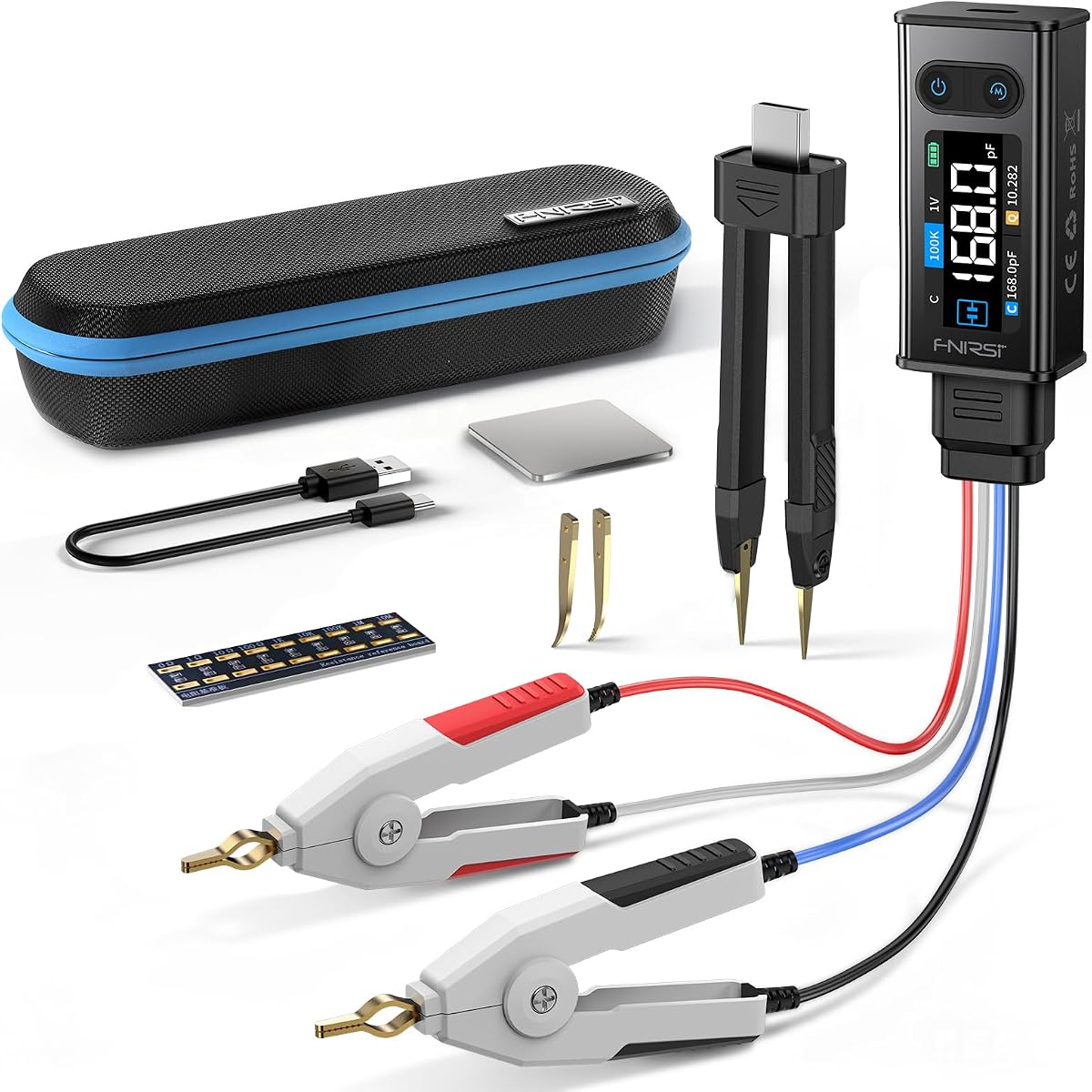


The Smart Tweezers ST5S stands out as a professional-grade tool offering 0.1% accuracy. It is ideal for engineers who require reliable readings without frequent recalibration.
We may earn a commission when you buy through this link, at no additional cost to you.
Its ClearValue OLED display ensures readability in various lighting conditions. The inclusion of Swiss-made 24K gold-plated test leads minimizes contact resistance for precise SMD testing.
While expensive, the precision and lifetime support justify the investment. The pocket case and spare leads add value for field technicians who need a portable lab solution.
Buy this if you need top-tier accuracy for critical diagnostics. It is the definitive choice for professionals who cannot afford measurement errors.
The 0.1% accuracy ensures that every component measurement is trustworthy for critical circuit analysis.
Lifetime support and a two-year warranty guarantee long-term reliability for demanding technical workflows.
We may earn a commission when you buy through this link, at no additional cost to you.
The Pro1-100KHz LCR Meter delivers exceptional versatility with five test frequencies. Its 0.1% accuracy rating makes it suitable for demanding industrial applications.
We may earn a commission when you buy through this link, at no additional cost to you.
With a wide measurement range for resistance and inductance, this tool handles diverse components. The diode testing function adds extra utility for comprehensive PCB diagnostics.
It is a premium option with a higher price tag. However, the accuracy and frequency options provide significant value for advanced electronics repair tasks.
Choose this for professional environments needing robust testing capabilities. It balances high-end performance with essential features for serious technicians.
Five test frequencies allow detailed analysis of components across different operational ranges.
The wide measurement range supports testing everything from tiny capacitors to large inductors.
We may earn a commission when you buy through this link, at no additional cost to you.
The Neoteck 10kHz offers exceptional value for hobbyists and casual repair work. It includes auto identification and a rotatable screen for ergonomic use.
We may earn a commission when you buy through this link, at no additional cost to you.
Data storage and Excel export features enhance workflow efficiency. Multi-point calibration ensures decent accuracy despite the lower price point.
Build quality is good but not industrial grade. The 10kHz limit may restrict testing for high-frequency components, but it covers most standard repairs.
Select this if you need a cost-effective tool for general use. It provides advanced features usually found on more expensive models.
The rotatable screen ensures comfortable viewing regardless of how you hold the device.
Excel export capabilities help track test results for quality control and documentation.
We may earn a commission when you buy through this link, at no additional cost to you.
The FNIRSI LCR-ST1 is a compact tester designed for quick SMD repairs. Its fixed screen design is simple and effective for basic tasks.
We may earn a commission when you buy through this link, at no additional cost to you.
It supports data export via PC, which is useful for record-keeping. The inclusion of two tweezer head types increases versatility for different component shapes.
Performance is solid for hobbyist use. The lack of screen rotation limits viewing angles, but the device remains easy to operate.
Use this for quick fault detection on circuit boards. It is a practical tool for those who need reliable readings without complexity.
Auto recognition saves time by identifying components without manual mode selection.
Two types of tweezer heads allow testing of varied component geometries efficiently.
We may earn a commission when you buy through this link, at no additional cost to you.
The FNIRSI LCR-ST2 extends capabilities with a 100kHz frequency range. This is valuable for testing RF components and high-frequency circuits.
We may earn a commission when you buy through this link, at no additional cost to you.
A large display and rear magnet improve workspace ergonomics. The inclusion of Kelvin clips enhances measurement accuracy for low-resistance tests.
It is more expensive but offers better performance for complex tasks. The auto sorting feature helps detect abnormal components quickly during repairs.
Choose this for more advanced electronics work. It bridges the gap between hobbyist tools and professional-grade equipment.
The 100kHz range allows accurate testing of RF and high-speed circuit components.
A built-in magnet keeps the unit secure on metal surfaces during intensive repair sessions.
We may earn a commission when you buy through this link, at no additional cost to you.
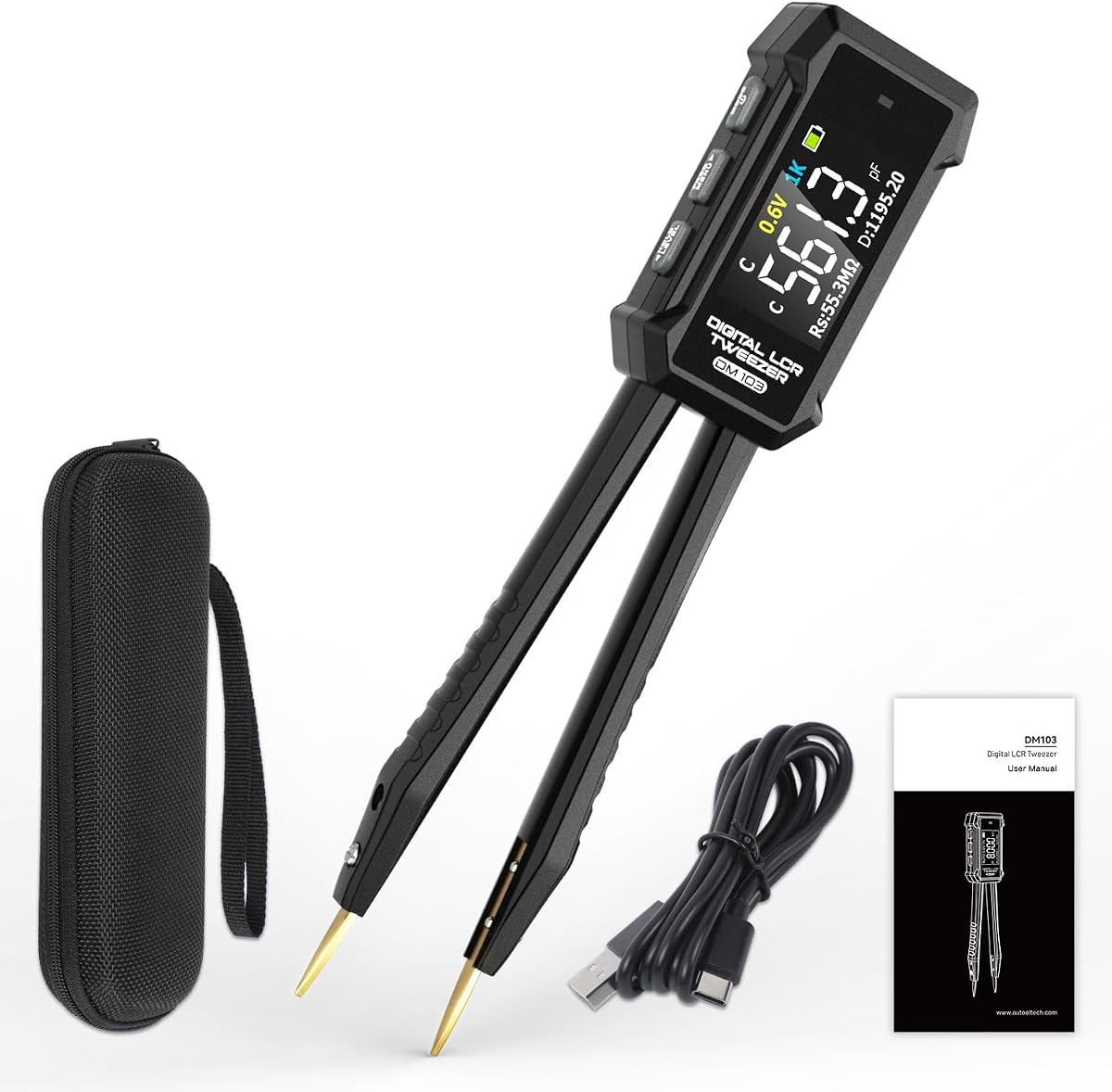
The DM103 LCR Tweezer stands out for its user-defined calibration feature. This helps maintain accuracy over time as components age.
We may earn a commission when you buy through this link, at no additional cost to you.
A flip OLED screen ensures readability in tight spaces. The adjustable frequency allows precise testing across various component types.
Build quality is decent but lacks some advanced data features. Calibration options make it a strong candidate for maintaining consistent results.
Opt for this if calibration flexibility is important to your workflow. It offers a unique mix of features for technical users.
User-defined calibration ensures long-term precision by correcting drift over time.
The flip OLED screen adapts to your viewing angle for comfortable long-term use.
We may earn a commission when you buy through this link, at no additional cost to you.
The LT1 Mini LCR offers a signal generator function, which is rare for tweezers. This adds significant value for testing and repairing complex circuits.
We may earn a commission when you buy through this link, at no additional cost to you.
Auto screen rotation and high battery capacity improve user experience. The sweep frequency feature helps visualize component characteristics dynamically.
It is a robust tool with many advanced features. The interface may take time to learn, but the capabilities are impressive.
Select this for advanced projects needing multifunctional tools. It goes beyond standard LCR testing to provide comprehensive diagnostics.
Built-in signal generation allows active testing of circuits without external sources.
A 400mAh battery supports extended use for long repair sessions without interruption.
We may earn a commission when you buy through this link, at no additional cost to you.
The AUTOOL DM103 features an IPS display for exceptional clarity. This ensures readings are legible in bright workshop environments.
We may earn a commission when you buy through this link, at no additional cost to you.
Firmware upgrade options allow for future feature enhancements. The auto recognition function streamlines the testing process significantly.
It is a reliable mid-range option with modern display technology. The lack of PC export limits data tracking capabilities.
Use this for daily repairs where screen clarity matters. It is a solid choice for technicians who prioritize visual feedback.
HD IPS display technology ensures accurate color reproduction and wide viewing angles.
Firmware upgrades keep the device up-to-date with the latest features.
We may earn a commission when you buy through this link, at no additional cost to you.
The Global Specialties LCR-58 focuses on simplicity. It is a straightforward tool for basic DCR measurements and component checks.
We may earn a commission when you buy through this link, at no additional cost to you.
Series and parallel modes help with specific circuit analysis. Data hold ensures readings can be reviewed after component removal.
It lacks advanced features but gets the job done reliably. This is ideal for users who prefer minimal complexity.
Choose this for basic testing needs. It provides essential functionality without unnecessary distractions.
Core DCR features meet fundamental testing requirements effectively.
Simple design reduces the risk of user error during basic measurements.
We may earn a commission when you buy through this link, at no additional cost to you.
The Mini Smart Tweezer ZT-MD2 offers a high-frequency scan of up to 100kHz. This allows testing of high-speed components.
We may earn a commission when you buy through this link, at no additional cost to you.
Its CNC metal housing provides durability and heat resistance. Auto recognition and adjustable frequencies offer flexibility for diverse tasks.
Documentation is limited, which may challenge new users. However, the build quality and performance are commendable for the price.
Select this for durable testing tools with high frequency. It is a great value for enthusiasts needing robust construction.
100kHz scan capability enables accurate testing of high-speed components.
CNC metal housing ensures the device withstands regular use.
We may earn a commission when you buy through this link, at no additional cost to you.
Selecting the right Lcr Meter Tweezer depends on your specific testing needs, component types, and budget. This guide helps you evaluate critical factors.
Accuracy determines how reliable your readings are. Professional work requires 0.1% accuracy while hobbyists may accept 0.5%.
Prioritize accuracy if you work with sensitive electronics.
Higher frequencies like 100kHz are essential for RF and high-speed components. Standard repairs often suffice with 10kHz.
Match the frequency range to your component types.
A clear, rotatable screen enhances usability. OLED or IPS displays offer better readability in varied lighting conditions.
Look for adjustable brightness and size.
Compact designs with rechargeable batteries improve field use. Weight and ergonomics matter for long sessions.
Choose a lightweight unit for mobility.
PC connectivity allows data logging and analysis. Excel export is useful for tracking component histories.
Select models with USB if documentation is needed.
Auto or user calibration maintains accuracy over time. Some models offer specific calibration routines for precision.
Check for calibration options before buying.
Metal housings and gold-plated tips ensure longevity. Look for rugged designs if the tool will be used frequently.
Invest in durable materials for reliability.
Prices vary widely. Determine your needs to balance cost with essential features.
Avoid overspending on unneeded functions.
Start by powering on the device and allowing it to warm up. Ensure the tweezers are clean to avoid measurement errors.
Select the appropriate frequency based on your component. Press the clamp to engage auto recognition or manually set modes.
Store the device in its case when not in use. Keep tips dry and check battery levels regularly for consistent performance.
Most budget models offer 0.5% accuracy. Premium devices often reach 0.1%. Professional applications require the highest accuracy.
Yes, some models support both SMD and through-hole parts. Check specifications for compatibility with your components.
Many devices offer auto calibration. Others allow user-defined calibration using standard resistors.
Most modern Lcr Meter Tweezer units use rechargeable batteries. Check charging interfaces and battery life.
PC connectivity is available on many models for data export. However, not all budget models include this feature.
RF testing typically requires 100kHz or higher. Ensure your tool supports the frequency range needed for specific components.
Keep tips clean and dry to prevent corrosion. Avoid physical damage to maintain low contact resistance.
The top three picks offer a range of options from budget-friendly to professional-grade. Consider your specific needs when making a selection.
Prioritize accuracy and frequency range for professional tasks. Hobbyists may find standard models sufficient for general repairs.
Prices fluctuate frequently so check current listings before purchasing. Your right tool ensures precise and reliable results.