
HGLRC Mini M100 GPS Module
4.6Editor score
Compact 21mm size
Supports 3.3V to 5V
Ceramic antenna included
This guide compares ten top GPS modules for drones focusing on accuracy speed and compatibility to help you choose the right navigation system.
GPS modules are essential components for modern drones enabling precise navigation and reliable return-to-home features. Selecting the right module ensures your aircraft maintains accurate positioning even in challenging environments with limited satellite visibility.
We evaluated ten leading GPS modules based on chipset generation antenna quality and protocol support. Our analysis considers compatibility with popular flight controllers and the ability to lock onto multiple satellite constellations for enhanced reliability.
Each pick below highlights specific strengths such as compact design or multi-GNSS support. Keep in mind that prices and availability change frequently so verify current details before purchasing your next drone navigation component.
4.6Editor score
4.8Editor score

4.7Editor score
This table provides a side-by-side comparison of all ten GPS modules including key specifications and compatibility details to help you make an informed decision quickly.




The HGLRC M100 Pro GPS stands out as a top choice for FPV fixed-wing UAVs needing reliable navigation. With its 10th generation chip and 120 channel receiver it ensures quick satellite locks even in areas with partial sky visibility.
We may earn a commission when you buy through this link, at no additional cost to you.
Its QMC5883L compass provides accurate heading data which is crucial for autonomous flight modes. The expanded receiving channel count helps maintain a stable connection reducing the risk of signal loss during critical maneuvers.
While it performs excellently in open skies the module is specifically designed for FPV fixed-wing applications. Pilots should ensure proper orientation during installation to avoid magnetic interference from the drone frame.
This module is ideal for builders prioritizing performance and reliability in their UAV projects. The manufacturer offers responsive support which adds peace of mind for users new to GPS integration.
The upgraded chip significantly reduces time to first fix ensuring your drone is ready for takeoff faster than older models.
Accurate heading data from the built-in compass enables precise waypoint navigation and stable return-to-home functions.
We may earn a commission when you buy through this link, at no additional cost to you.
The HGLRC M100-5883 offers excellent value for builders seeking reliable GPS without breaking the bank. It supports GPS Galileo and BDS positioning systems ensuring you can track satellites from multiple networks simultaneously.
We may earn a commission when you buy through this link, at no additional cost to you.
Its small 21mm by 21mm form factor makes it easy to integrate into tight spaces on fixed-wing or racing drones. The ceramic antenna helps filter out noise improving signal quality in noisy RF environments.
Though it lacks some advanced features of premium units it delivers consistent performance for standard autonomous flights. Users should take time to calibrate the compass thoroughly to ensure accurate heading data.
This module is perfect for hobbyists or schools needing multiple units at a lower cost. The included PCB design simplifies wiring making it a straightforward choice for beginners.
You get core GPS functionality without unnecessary extras keeping the cost low while maintaining high accuracy standards.
Support for three constellations increases the number of visible satellites improving lock times and positioning stability.
We may earn a commission when you buy through this link, at no additional cost to you.
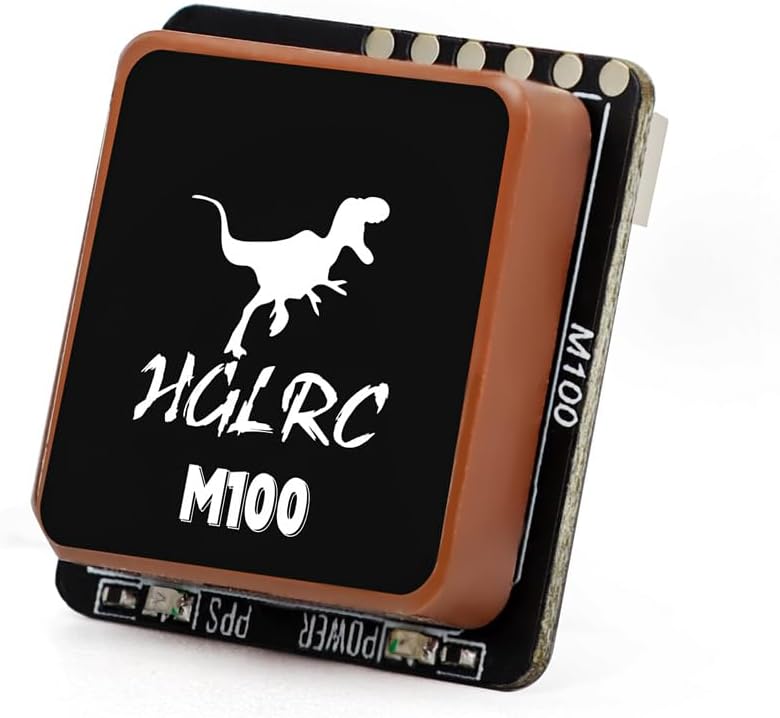
The HGLRC Mini M100 is designed specifically for smaller FPV racing drones where weight and space are critical. Its compact design fits seamlessly on 2 to 7 inch frames without adding significant drag or weight.
We may earn a commission when you buy through this link, at no additional cost to you.
Supporting both 3.3V and 5V power inputs makes it versatile for various flight controller configurations. The onboard POWER and PPS indicator lights give you immediate visual feedback on module status during setup.
While it works well for racing applications the antenna range is optimized for short to mid-distance flights. Users flying beyond visual line of sight may need to consider a unit with higher gain.
This module is an excellent choice for racers who need basic GPS return-to-home capabilities. The UBLOX compatibility ensures it works smoothly with popular Betaflight and INAV firmware.
Its small footprint ensures it does not interfere with the aerodynamics of high-speed racing drones.
Dual voltage support allows you to connect directly to either 3.3V or 5V rails on your flight controller.
We may earn a commission when you buy through this link, at no additional cost to you.
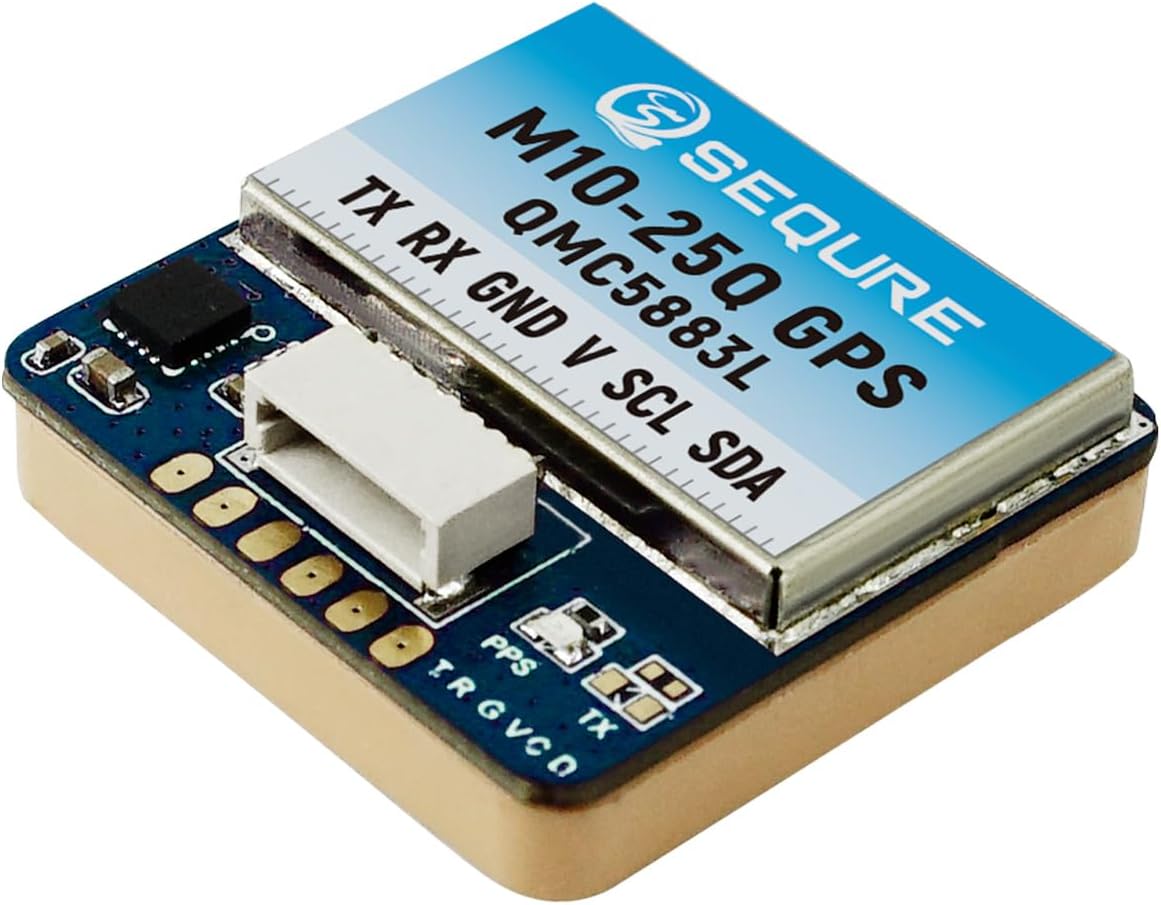
The SEQURE M10-25Q delivers high-end features at a competitive price point. Its 10Hz output frequency ensures your flight controller receives position updates ten times per second for smoother autonomous movements.
We may earn a commission when you buy through this link, at no additional cost to you.
Supporting GPS GLONASS BDS GALILEO SBAS and QZSS gives you access to the maximum number of satellites available globally. This multi-constellation support significantly improves reliability in urban canyons or dense forest areas.
The dual connection methods allow you to choose between plug-and-play or soldering based on your preference. The built-in QMC5883L compass provides accurate heading data essential for advanced navigation modes.
This module is recommended for users who want top-tier performance without custom engineering. It balances ease of use with professional-grade capabilities making it suitable for both hobbyists and professionals.
Tracking more satellites simultaneously reduces errors and ensures your drone stays on the intended flight path.
Choose between soldered or connector-based setups to match your skill level and build requirements.
We may earn a commission when you buy through this link, at no additional cost to you.
The JeeFly M8N is engineered for professional and advanced hobbyist use with Pixhawk and PX4 systems. It supports up to 26+ satellites tracking ensuring robust positioning even in challenging signal conditions.
We may earn a commission when you buy through this link, at no additional cost to you.
Its 10Hz update rate provides ultra-responsive data for real-time navigation and precise return-to-home functions. The integrated compass delivers reliable heading control which is critical for autonomous mission planning.
The module features a 270mm cable and mounting base for easy integration into larger airframes. Its wide operating temperature range ensures it performs reliably whether you are flying in heat or cold.
This is the top choice for serious users needing industrial reliability. While heavier than racing modules its performance justifies the weight for fixed-wing or multi-rotor professional applications.
Built to withstand extreme conditions this module ensures your drone completes its mission without GPS failures.
The integrated compass provides consistent heading data essential for complex waypoint missions and automation.
We may earn a commission when you buy through this link, at no additional cost to you.
The Readytosky M10 is tailored specifically for the Pixhawk 2.4.8 flight controller ensuring seamless integration. It features onboard FLASH memory that saves configuration settings so you never lose calibration after power loss.
We may earn a commission when you buy through this link, at no additional cost to you.
With a positioning accuracy of 1.5m CEP in ideal environments it offers high precision for landing and navigation tasks. The included GPS holder helps position the antenna away from interference sources on the aircraft.
Its compatibility is limited to specific Pixhawk models which might be a constraint for users with other flight controllers. However for those invested in the Pixhawk ecosystem this module simplifies setup and maintenance.
This module is ideal for developers and educators using the Pixhawk 2.4.8 platform. The persistent memory saves time on repeated calibrations making it efficient for testing and development workflows.
Settings are saved onboard ensuring your drone retains calibration data even after unexpected power cycles.
The 1.5m accuracy ensures your drone lands exactly where intended for safer operations in tight spaces.
We may earn a commission when you buy through this link, at no additional cost to you.
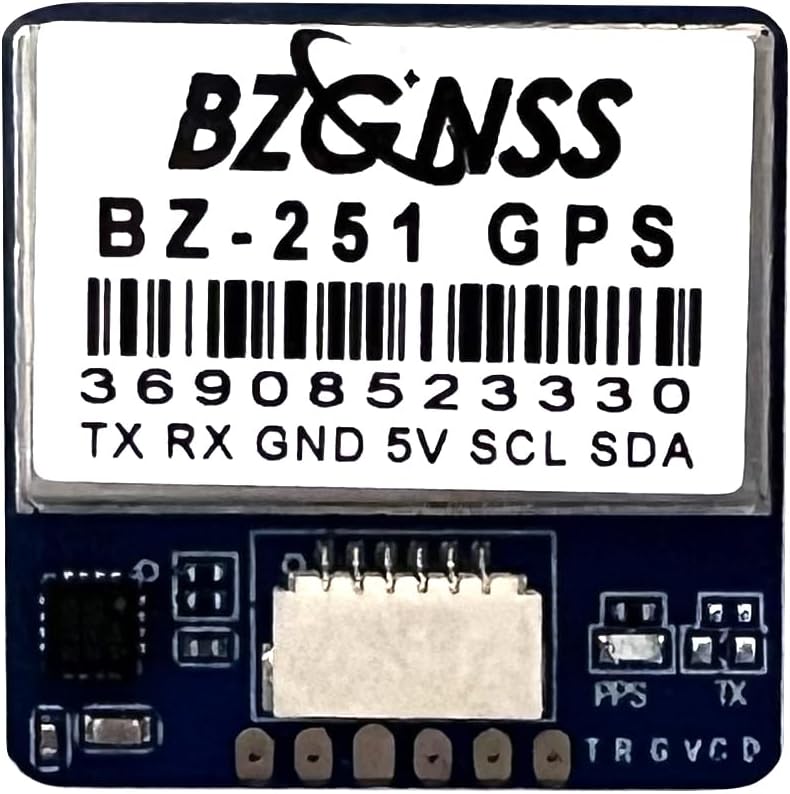
The Dual Protocol BZ-251 is engineered to support critical fail-safe and rescue functions for fixed-wing aircraft. It provides essential location data to your flight controller enabling reliable return-to-home if the signal is lost.
We may earn a commission when you buy through this link, at no additional cost to you.
Its dual protocol support allows you to use either NMEA or UBX protocols depending on your flight controller requirements. The oil-sprayed ceramic antenna resists scratching and oxidation ensuring long-term durability and signal stability.
With GPS GLONASS and BDS joint positioning it achieves high accuracy of 1.5m for confident navigation. This module is a vital safety component for pilots flying beyond visual line of sight.
It is best suited for serious fixed-wing pilots who prioritize safety above all else. The high ratings reflect its reliability and effectiveness in real-world rescue scenarios.
The failsafe capabilities ensure your aircraft returns home automatically if control is lost protecting your investment.
The special oil-spraying process protects the antenna from wear extending its life in tough conditions.
We may earn a commission when you buy through this link, at no additional cost to you.
The BZGNSS BZ-251 is designed for seamless compatibility with Speedybee F405 and F722 flight controllers. It uses the M10 dual protocol system supporting both NMEA and UBX for flexible integration.
We may earn a commission when you buy through this link, at no additional cost to you.
A built-in battery eliminates issues caused by poor power connections ensuring your settings remain saved even when power is cut. The module locks onto satellite signals rapidly reducing wait time before flight.
Its compact design makes it easy to mount on various RC aircraft without adding significant bulk. The multi-constellation support ensures you get strong signals even in areas with obstructed views of the sky.
This module is the top pick for users invested in the Speedybee ecosystem. It offers a reliable and feature-rich solution for racing and long-range flight applications.
The internal battery ensures your configuration is preserved without needing constant power during flight prep.
Quick satellite acquisition means you spend less time waiting and more time flying.
We may earn a commission when you buy through this link, at no additional cost to you.
The AERO SELFIE FK-C1 M9 supports GPS GLONASS Galileo and BeiDou for enhanced positioning in challenging environments. It can track up to 32 satellites which is excellent for urban canyons or dense forests.
We may earn a commission when you buy through this link, at no additional cost to you.
Its 20mm by 20mm size and 7g weight make it ideal for FPV racing drones where every gram counts. The IST8310 magnetic compass provides reliable heading data for precise navigation and waypoint tasks.
With a power consumption of just 80mA it is energy efficient for battery-powered drones. The blue LED indicator blinks when a 3D fix is acquired giving you clear visual feedback on status.
This module is a great choice for urban flyers needing robust satellite tracking. Its small size and low weight ensure it does not hamper the performance of agile racing frames.
Tracking up to 32 satellites ensures reliable positioning even when tall buildings block the sky view.
Low power draw helps extend your drone's flight time without sacrificing navigation reliability.
We may earn a commission when you buy through this link, at no additional cost to you.
The FK-D1 GNSS Module is built for drones and robotics needing reliable navigation with wide compatibility. It features the M10 chip for fast positioning with a 10Hz update rate for precise control.
We may earn a commission when you buy through this link, at no additional cost to you.
With a high-gain 25 by 25 by 4mm antenna it performs well in urban areas or dense natural cover. The built-in flash memory saves user settings so you avoid reconfiguration after power cycles.
Compatible with INAV Betaflight Ardupilot and PX4 it works seamlessly with popular flight control systems. The integrated QMC5883L sensor enhances orientation accuracy ensuring reliable motion tracking even in dynamic environments.
This module is perfect for multi-use robotics or drone builders seeking flexibility. Its robust features make it a solid investment for projects requiring consistent long-term performance.
Works with major software platforms ensuring you can use it across different projects.
The high-gain antenna ensures you get strong signal even when flying in difficult locations.
We may earn a commission when you buy through this link, at no additional cost to you.
Selecting the right GPS module requires understanding key technical factors like chipset generation and compatibility. This section breaks down the most important considerations for your specific flying needs.
Newer chipsets like the M10 or 10th generation offer faster satellite acquisition and lower power consumption. Older chips may still work but can struggle with lock times in open areas. Always check the product description for the specific chip model before buying.
Prioritize newer generations for improved performance and longevity in your drone projects.
Flight controllers often require specific protocols like NMEA or UBX. Dual protocol modules offer maximum flexibility across different brands of controllers. Mismatched protocols can lead to connection errors or failure to arm the drone.
Confirm your flight controller documentation supports the protocol offered by the GPS module.
Modules supporting GPS GLONASS Galileo and BeiDou track more satellites simultaneously. This improves accuracy in challenging environments like cities or forests where the sky is partially blocked. More satellites means better reliability and fewer positioning errors.
Choose a module with multi-constellation support to ensure stable navigation in all locations.
A built-in compass is crucial for heading control and autonomous flight modes. Modules without a compass require separate installation which adds weight and complexity. Ensure the compass is shielded from motor interference for accurate data.
Select a module with a high-quality integrated compass for simplified installation.
The antenna determines how well your module picks up satellite signals. Ceramic antennas generally offer better stability than plastic ones. Look for oil-sprayed or protected antennas if you plan to fly in dusty or wet conditions.
Invest in a module with a robust antenna design to avoid signal dropouts.
A higher update rate like 10Hz ensures your drone receives position data ten times per second. This is vital for high-speed racing or precision landing. Lower rates may introduce latency affecting flight stability and navigation.
Aim for at least 10Hz update rates for smooth and responsive autonomous flight.
Racing drones often have strict space constraints where every millimeter counts. Larger modules fit better on fixed-wing or professional airframes but may be too heavy for FPV racers. Check the mounting footprint before purchasing.
Ensure the module size fits within the designated space on your frame.
Some modules require 5V while others accept 3.3V directly. Mismatched voltage can damage the module or flight controller. Check your controller's output voltage to avoid the need for external regulators.
Match the module power voltage to your flight controller rails for safe operation.
Begin by mounting the GPS module as far away as possible from magnets or high current wires. This ensures the compass readings are not influenced by the drone's electrical systems. Secure the module firmly with vibration damping material.
After installation calibrate the compass using your flight controller software. Rotate the drone in figure-eight patterns to ensure accurate heading data. This step is vital before your first autonomous flight to prevent navigation errors.
Regularly inspect the antenna for physical damage or loose connections. Dust or moisture can degrade signal quality over time so clean the module gently. Keep the module firmware updated if available to maintain optimal performance.
Most drone GPS modules should be mounted horizontally with the antenna facing up. This orientation aligns with the satellite orbit plane ensuring the best signal reception. Check the specific mounting instructions provided by the manufacturer for any exceptions.
Common causes include magnetic interference from the drone frame or a damaged antenna. Try testing the module outside away from metal objects and other electronics. Ensure the flight controller settings are configured for the correct protocol type.
Yes many GPS modules are compatible with both types of aircraft. However ensure the controller supports the required protocols and the size fits your frame. Some modules are specifically tuned for fixed-wing dynamics so check compatibility details.
With proper care and protection from extreme weather a GPS module can last for years. The ceramic antenna is durable but physical damage can reduce lifespan. Environmental factors like salt or acid rain may require extra protection.
If the module has a built-in compass and meets your flight controller requirements you generally do not need an external one. This reduces wiring complexity and weight. However separate compasses are useful if interference is an issue.
NMEA is a text-based protocol used by many older or standard controllers. UBX is binary and more efficient allowing for higher data rates and configuration settings. Choose the one that your specific flight controller software supports.
The ten modules reviewed offer a wide range of options to suit different flying styles and budgets. From the compact Mini M100 for racers to the robust JeeFly M8N for pros there is a strong fit for everyone.
Prioritize factors like chipset generation and protocol support to ensure your module works seamlessly with your setup. A reliable GPS module is an investment in safety and precision that pays off during every flight.
Prices and stock levels change frequently so check the product links for the latest information before you buy. Verify compatibility with your specific flight controller to avoid any setup issues.