
AOSEED AI 3D Printer
4.5Editor score
AI creative tools
Kids safe design
One tap print
This guide compares the top easy to use 3D printers for beginners and experts, featuring auto leveling, fast speeds, and reliable setups.
Finding a machine that balances simplicity with performance is crucial for anyone entering the world of additive manufacturing today.
We evaluated ten leading models based on setup time, calibration features, and overall user experience to bring you this curated list.
Each pick highlights specific strengths like speed or safety, and while prices fluctuate, these selections represent the best value available now.
4.5Editor score

4.7Editor score

4.5Editor score
The following table provides a side by side comparison of all ten selected models, highlighting their key specifications and unique selling points.




The Bambu Lab A1 stands out as a top contender for ease of use, earning high praise for its automated setup processes.
We may earn a commission when you buy through this link, at no additional cost to you.
Its ability to handle multiple colors seamlessly and maintain high speeds without sacrificing quality makes it a favorite among hobbyists.
While the additional AMS unit costs extra, the core printer offers a complete experience that minimizes the usual frustrations of FDM printing.
Anyone looking for a reliable machine that requires minimal tinkering should strongly consider the A1 for their next project.
The printer handles Z offset and bed leveling automatically, ensuring every print starts with a perfect first layer.
This technology adjusts extrusion on the fly to maintain consistent print quality across different speeds and materials.
We may earn a commission when you buy through this link, at no additional cost to you.
This model leverages a CoreXY structure to deliver rapid prints while keeping the mechanical system robust and reliable.
We may earn a commission when you buy through this link, at no additional cost to you.
Users appreciate the straightforward setup process and the convenience of monitoring prints remotely through a dedicated mobile app.
Although the overall rating is slightly lower, the speed and feature set offer significant value for those needing quick prototypes.
It is an excellent choice for users who prioritize efficiency and want to avoid manual calibration steps.
The motion system allows for accelerations up to 20,000 mm/s², significantly reducing print times for standard models.
Real-time status alerts and control features allow you to manage your workflow from anywhere in the house.
We may earn a commission when you buy through this link, at no additional cost to you.
Perfect for beginners and kids, this mini version brings the power of Bambu Lab to a smaller, more accessible package.
We may earn a commission when you buy through this link, at no additional cost to you.
The inclusion of an LED lamp kit provides an immediate creative project, encouraging users to start printing right out of the box.
Despite its size, it maintains the high quality and reliability expected from the larger A1 model.
It is ideal for dorm rooms or small desks where space is limited but quality is not.
Included accessories like the lamp kit allow you to create functional and decorative items immediately.
Access MakerWorld for pre-sliced models and use the Handy app for seamless management of your prints.
We may earn a commission when you buy through this link, at no additional cost to you.
The P1S offers a fully enclosed build chamber, making it capable of printing advanced materials like ABS and ASA safely.
We may earn a commission when you buy through this link, at no additional cost to you.
Its speed and precision rival the best open-source machines, but with a much more user-friendly setup and interface.
Users benefit from a robust ecosystem that supports multi-material printing when paired with the appropriate accessories.
This is the perfect step-up for creators ready to move beyond basic PLA projects.
The fully enclosed body helps maintain consistent temperatures, which is crucial for warping-sensitive materials.
Most users can set up the printer and print their first object within fifteen minutes of unboxing.
We may earn a commission when you buy through this link, at no additional cost to you.
Designed specifically for younger users and families, this printer emphasizes safety and creativity through AI integration.
We may earn a commission when you buy through this link, at no additional cost to you.
Children can generate 3D models using voice or image prompts, removing the technical barrier to entry entirely.
The one-tap printing process ensures that fun does not get lost in setup frustration or complex software.
It is a fantastic educational tool that encourages STEM learning through hands-on creation.
Kids can use voice or image prompts to create custom models without needing traditional design skills.
Features like pinch-resistant enclosures and auto leveling make it safe for home use around children.
We may earn a commission when you buy through this link, at no additional cost to you.
The Tina2C is a fully assembled mini printer designed to get beginners printing within minutes of opening the box.
We may earn a commission when you buy through this link, at no additional cost to you.
It comes with a library of creative modules and STEM courses that turn printing into an educational experience.
Flexibility is key, with support for both Wi-Fi printing and offline TF card usage.
This is a great gift for students looking to explore engineering and design principles.
Interactive tools and updated courses help users learn engineering concepts while they create.
Choose between direct app printing or offline card mode depending on your network availability.
We may earn a commission when you buy through this link, at no additional cost to you.
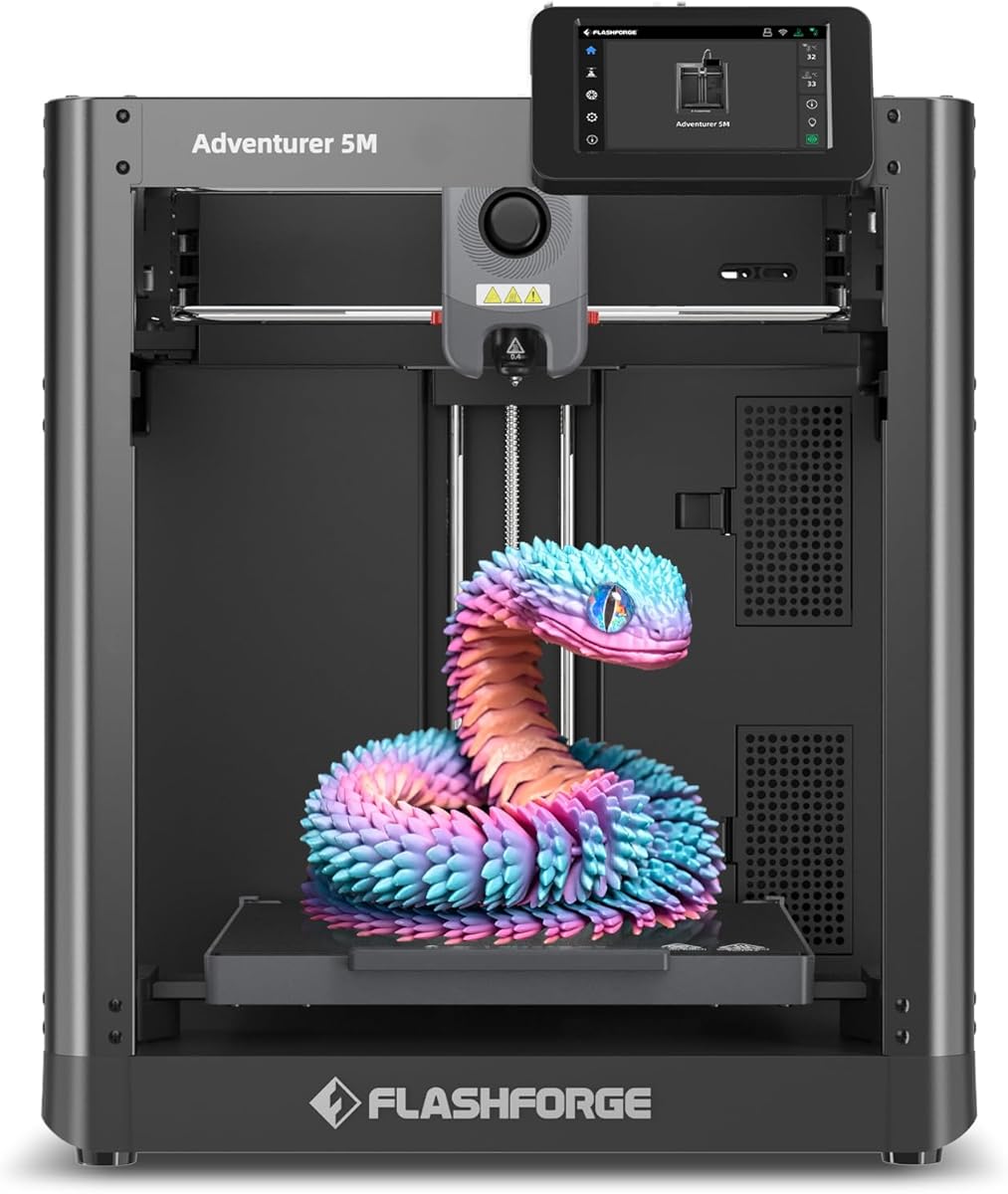
Combining speed with reliability, the AD5M uses an all-metal CoreXY structure to ensure stable high-speed printing.
We may earn a commission when you buy through this link, at no additional cost to you.
The one-click leveling system simplifies setup, ensuring a perfect first layer every time without manual tools.
Maintenance is a breeze with a tool-free nozzle swap system that takes just seconds.
It is an excellent option for those who want a durable machine that can handle frequent use.
The CoreXY design ensures high precision and durability during rapid high-speed printing operations.
Swap nozzles in just seconds without tools, making it easy to switch between different print requirements.
We may earn a commission when you buy through this link, at no additional cost to you.
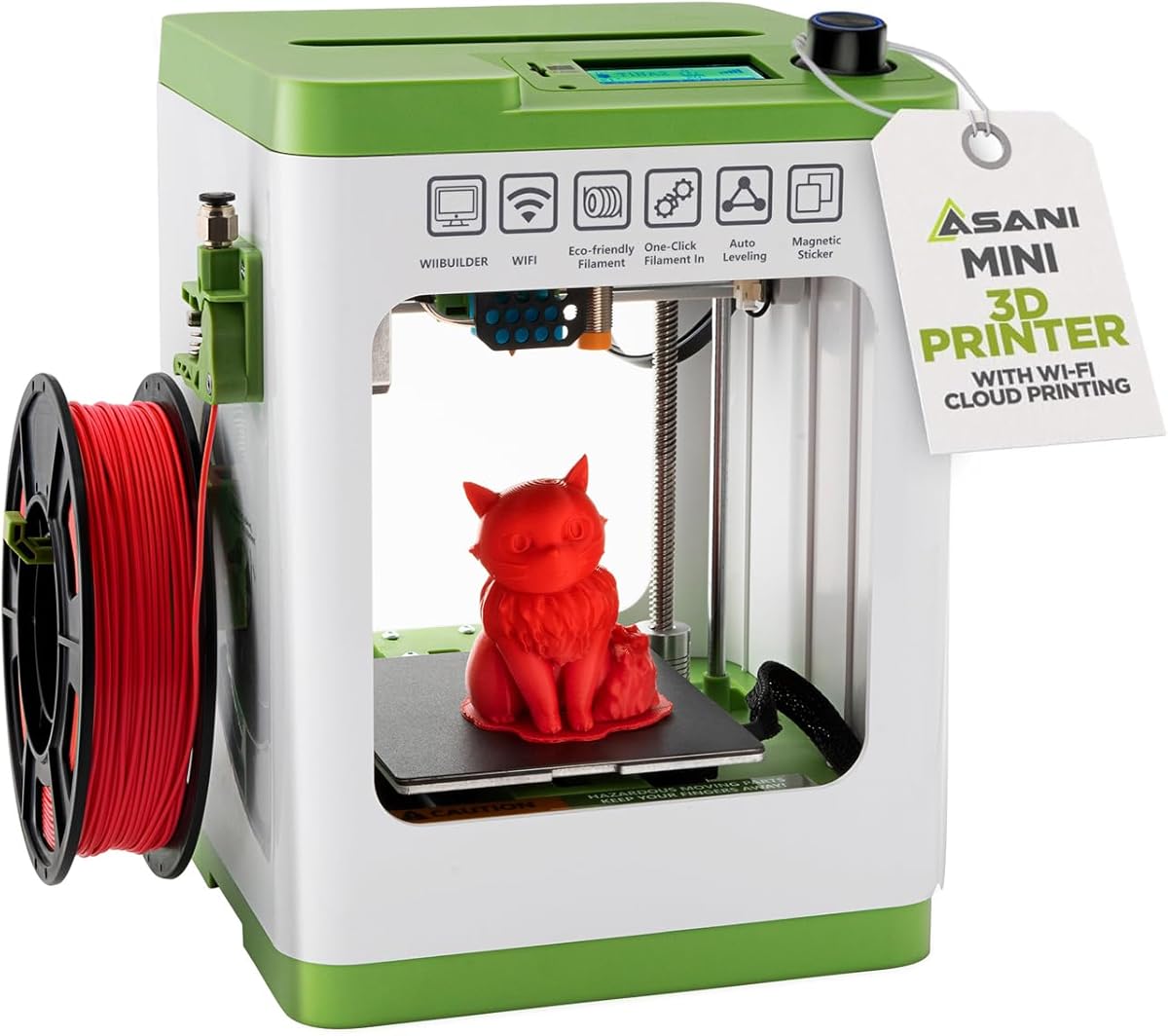
This fully assembled starter kit is designed to eliminate the hassle of assembly, getting you printing right away.
We may earn a commission when you buy through this link, at no additional cost to you.
The printer includes filament and a pre-installed SD card, providing everything you need for your first project.
With auto leveling and open-source compatibility, it offers both convenience and flexibility.
It is a great entry point for beginners who want a no-fuss experience without breaking the bank.
Everything is included from the box, including filament and a pre-loaded SD card with models.
Compatible with major slicing software like Cura, giving you full control over your print settings.
We may earn a commission when you buy through this link, at no additional cost to you.
The Ender 3 V3 SE modernizes the classic series with auto leveling and a direct drive extruder.
We may earn a commission when you buy through this link, at no additional cost to you.
Users benefit from faster speeds and quieter operation, making it a solid choice for home environments.
While it requires some assembly, the process is streamlined compared to older models.
It is a reliable option for those who want proven technology at an accessible price point.
The direct drive system ensures consistent feeding for a wide range of filaments including TPU.
Automatic Z-offset calibration simplifies setup and ensures a reliable first layer.
We may earn a commission when you buy through this link, at no additional cost to you.
This printer stands out for its native four-color capability, allowing for vibrant prints without complex add-ons.
We may earn a commission when you buy through this link, at no additional cost to you.
The LeviQ leveling system ensures a perfect first layer, and the large build volume supports ambitious projects.
AI monitoring features provide peace of mind by detecting print issues in real time.
It is an excellent choice for users who want to experiment with color without managing multiple extruders.
Built-in color switching allows for complex designs without needing external multi-material systems.
A 49-point calibration system ensures the bed is perfectly flat before every print job.
We may earn a commission when you buy through this link, at no additional cost to you.
Selecting the right 3D printer involves weighing features like ease of setup, build quality, and specific capabilities against your personal needs.
Auto calibration systems eliminate the need for manual leveling, which is often the most frustrating part of printing for beginners. Look for printers that offer automatic bed leveling and Z-offset adjustments to ensure every print starts on the right foot. This feature alone can save hours of troubleshooting and failed prints.
Always prioritize models with full auto calibration to minimize the time spent on setup.
Modern printers have moved away from slow, traditional speeds to offer high-speed printing capabilities without sacrificing quality. Models with CoreXY structures and high acceleration can complete projects in a fraction of the time. This efficiency is particularly valuable if you plan to print multiple prototypes or functional parts.
Higher speed capabilities mean you can focus on creating rather than waiting.
Consider the physical size of the printer and its build volume to ensure it fits your workspace and project requirements. Compact models are great for desktops or educational settings, while larger ones allow for bigger single-piece prints. Make sure you have enough clearance for ventilation and maintenance access.
Match the build volume to your typical project size to avoid unnecessary space constraints.
Different materials require different temperatures and nozzle configurations, so check what filaments the printer supports out of the box. Most beginner printers handle PLA well, but if you need technical materials like ABS or TPU, ensure the printer has the necessary extruder and enclosure. Versatility here expands your creative possibilities significantly.
Ensure the machine supports the specific filaments you intend to use.
The software experience is just as important as the hardware, with user-friendly apps and slicers making a huge difference. Look for printers that offer cloud libraries for pre-sliced models and remote monitoring capabilities. A strong ecosystem reduces the learning curve and helps you stay productive.
Choose a system with robust software support for a smoother workflow.
Safety should never be overlooked, especially if you plan to use the printer around children or in shared spaces. Features like enclosed designs, auto-shutdown on filament runout, and heat-resistant materials are crucial. Certification marks like TÜV Rheinland add an extra layer of assurance regarding electrical and physical safety.
Always prioritize safety features if you have children or limited supervision.
How easy it is to clean and maintain the machine will determine how often you actually use it. Quick-swap nozzles, flexible build plates, and self-cleaning features reduce downtime and frustration. A printer that is easy to maintain will encourage regular use and experimentation.
Select a model with easy maintenance features to keep your workflow uninterrupted.
Wireless connectivity allows you to start, monitor, and adjust prints remotely, which adds significant convenience. Options like Wi-Fi, app control, or SD card support provide flexibility depending on your network setup. Reliable connectivity ensures you never miss a critical moment in your print process.
Look for wireless options if you want to manage prints from your phone.
Start by following the initial setup guide included with your printer, which typically involves attaching a few key components and leveling the bed automatically. Ensure the machine is placed on a stable surface with good ventilation to prevent overheating during long print sessions.
To begin a print, select a model from the internal library or upload your own file via SD card or Wi-Fi. Monitor the first layer closely to ensure it adheres well to the build plate, as this is critical for the success of the rest of the print.
Perform regular maintenance by cleaning the build plate with isopropyl alcohol and checking the nozzle for clogs. Keeping the firmware updated and the printer clean will ensure consistent results and extend the lifespan of your machine.
An easy to use 3D printer typically features automatic bed leveling, a user-friendly interface, and guided setup processes. These elements minimize the technical knowledge required to get started, allowing users to focus on creating rather than troubleshooting mechanical issues.
While speed is not strictly necessary for beginners, faster printers allow for quicker feedback loops and more projects in less time. Modern entry-level models often balance speed with quality, making the learning process more engaging and efficient for new users.
Yes, auto leveling is highly recommended for beginners as it eliminates the tedious manual process of calibrating the print bed. This ensures a perfect first layer every time, reducing frustration and improving the success rate of early printing attempts.
PLA is widely considered the best filament for easy 3D printing because it is easy to print with and has low warping tendencies. It is available in many colors and finishes, making it ideal for beginners learning to print decorative or functional items.
You should clean the build plate and check the nozzle at least once a month, or more frequently if you are printing daily. Regular maintenance ensures that debris does not interfere with print quality and keeps the machine running smoothly.
Modern printers often have safety features like thermal runaway protection that make unattended printing safer. However, it is still recommended to monitor the first few prints and ensure the machine is in a fire-safe area to prevent accidents.
No, you do not need coding skills to use a 3D printer. Most models come with pre-designed files, and drag-and-drop slicing software makes managing files simple. Some even offer AI tools that generate models based on simple text or image inputs.
We have highlighted ten exceptional machines that range from beginner-friendly kits to high-performance advanced units, each with unique strengths.
Prioritize features like auto calibration and software support if you want a stress-free experience that lets you focus on creativity.
Remember to check current pricing and availability before purchasing, as stock levels and costs may change rapidly in the market.