
Urban Worm Soil Thermometer – 5-in Stainless Steel Stem – Perfect for Gardening & Worm Bin
4.6Editor score
5-inch stainless steel stem
Easy-to-read color-coded marks
Ideal for worm bins and soil
This guide compares the best digital soil thermometers for accurate temperature readings to optimize plant growth and health across various gardening environmen
Choosing the right digital soil thermometer ensures your plants receive optimal care. Accurate temperature readings help you understand when to water, transplant, or protect your garden from extreme conditions effectively.
We evaluated ten top-rated models based on accuracy, durability, ease of use, and additional features like pH and moisture detection. Each product offers unique benefits for different gardening needs and budgets.
Each pick highlights key strengths, pros, and cons to help you decide. Prices may change, so check the current listing before purchasing to ensure you get the best value available today.
4.6Editor score

4.2Editor score

4.2Editor score
This table provides a side-by-side comparison of all ten products. Review each model's key specifications to find the perfect tool for your specific gardening requirements and preferences.




The YAMRON 4-in-1 Soil Moisture Meter stands out as a top digital soil thermometer for gardeners needing more than just temperature. It has a 4.2 rating and offers moisture, pH, sunlight data alongside temperature for complete plant care.
We may earn a commission when you buy through this link, at no additional cost to you.
Its large LCD screen with backlight ensures visibility in any light. The 45-degree rotating head allows easy viewing without bending over. Probe technology delivers quick results, helping you decide watering times quickly.
While it requires moist soil for accurate pH reading and batteries aren't included, these are minor trade-offs for the data depth. The rotating head significantly reduces back strain during prolonged use.
This tool suits serious gardeners wanting comprehensive soil health insights. If you value versatility and comfort, the YAMRON is an excellent investment for indoor and outdoor plant maintenance.
Measuring moisture, pH, temperature, and sunlight provides a full picture of plant needs for better growth outcomes.
The rotating head and large screen make reading data effortless, enhancing user experience during garden tasks.
We may earn a commission when you buy through this link, at no additional cost to you.
The Luster Leaf 1625 Digital Soil Thermometer is designed specifically for determining soil temperature during early season planting or transplanting. With a 4.2 rating, it focuses on delivering precise temperature data for timing garden tasks.
We may earn a commission when you buy through this link, at no additional cost to you.
Its simplicity is a strength. Gardeners who just need to know if the soil is warm enough for seeds will appreciate the straightforward interface without extra features cluttering the tool.
The limitation is its single function. If you need moisture or pH data, this thermometer cannot provide it. However, for temperature-focused needs, it is effective and affordable.
Ideal for beginners or those prioritizing planting schedules. If accurate soil temperature is your primary concern, the Luster Leaf 1625 is a dependable choice for seasonal gardening.
Accurate temperature readings ensure seeds and transplants are placed at optimal times for germination and survival.
Focused functionality keeps the tool simple and affordable for gardeners needing only temperature data.
We may earn a commission when you buy through this link, at no additional cost to you.
The 7-in-1 Digital Soil Tester Kit provides extensive data including moisture, pH, temperature, light, fertility, EC, and TDS. Its 4.4 rating highlights user satisfaction with its comprehensive approach to plant health monitoring.
We may earn a commission when you buy through this link, at no additional cost to you.
The EC and TDS functions allow water quality testing, which is rare in standard soil testers. This makes it ideal for hydroponics or fertilized soil management. The large backlight display aids readability.
As with many testers, dry soil affects accuracy, and the price is higher due to added features. However, the versatility justifies the cost for serious plant enthusiasts.
If you want one device for all soil and water metrics, this kit is unmatched. It serves gardeners seeking scientific insights into nutrient and water conditions.
EC and TDS measurements provide insight into water purity and mineral content affecting plant uptake.
Seven-in-one design reduces need for multiple tools, streamlining soil and environment analysis.
We may earn a commission when you buy through this link, at no additional cost to you.
The Reotemp K83B1 is a specialized thermometer with a 4.7 rating. It excels at compost pile monitoring with a 12-inch stem reaching deep into compost bins or soil.
We may earn a commission when you buy through this link, at no additional cost to you.
The included digital composting guide helps beginners manage efficient compost production. Corrosion-resistant stainless steel and waterproof design ensure durability in compost environments.
Its focus on temperature means no moisture or pH data. For gardeners prioritizing compost health or deep soil temperature, this is a robust tool.
Ideal for home composters or those with large garden soil needs. If deep temperature accuracy and durability are key, the Reotemp is a strong candidate.
The included guide assists in optimizing compost decomposition rates through precise temperature tracking.
Stainless steel and waterproof materials withstand harsh compost environments and frequent use.
We may earn a commission when you buy through this link, at no additional cost to you.
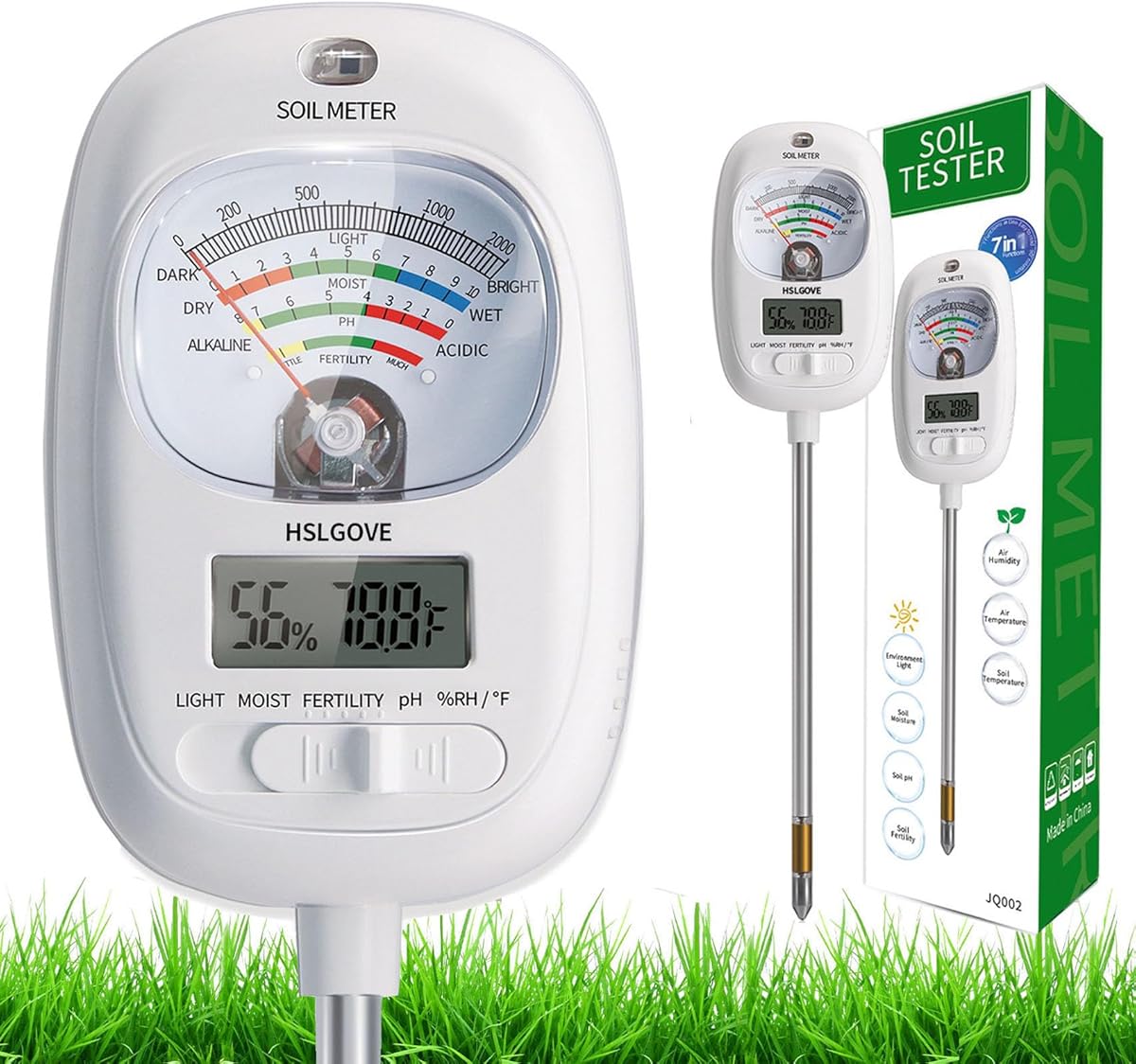
The HSLGOVE 7-in-One offers a patented dual-screen design combining soil and air temperature and humidity. With a 4.4 rating, it is a comprehensive tool for indoor and outdoor environments.
We may earn a commission when you buy through this link, at no additional cost to you.
Its ability to monitor air and soil separately helps optimize greenhouse or indoor plant care. The 3-metal probe ensures accurate pH and moisture data.
Battery installation and switching modes can be complex for some users. However, the breadth of data justifies the learning curve.
If you need environmental air data alongside soil metrics, this kit is ideal. It suits tech-savvy gardeners managing controlled indoor or greenhouse setups.
Dual screens allow simultaneous tracking of atmospheric and soil conditions for holistic plant health.
The unique metal probe design improves accuracy and durability for long-term testing.
We may earn a commission when you buy through this link, at no additional cost to you.
The Urban Worm Soil Thermometer has a 4.6 rating and is perfect for worm bins and soil. It features easy-to-read color-coded marks for quick temperature checks.
We may earn a commission when you buy through this link, at no additional cost to you.
Its 5-inch stainless steel stem penetrates soil effectively. It is ideal for maintaining worm health between 55F and 90F.
While it lacks digital precision, the simplicity and low cost make it accessible. For worm farmers, this tool is invaluable.
If you maintain vermicompost or need a simple soil check, this thermometer is the best budget choice for focused tasks.
Color-coded marks provide instant feedback without needing to interpret numbers.
Designed to keep worm habitats at optimal temperatures for decomposition efficiency.
We may earn a commission when you buy through this link, at no additional cost to you.
The ECOWITT WN34BS offers remote monitoring capabilities via Wi-Fi gateway. With a 4.2 rating, it allows viewing live soil data on apps or websites.
We may earn a commission when you buy through this link, at no additional cost to you.
It supports up to 8 channels and long-range transmission. This is ideal for large gardens or farms needing centralized tracking.
Requires a separate gateway for app functionality. For tech-integrated setups, this adds value despite the extra cost.
If you want real-time alerts and remote access, the ECOWITT is a premium choice for large-scale or modern gardening.
Live data on apps enables monitoring from anywhere, reducing physical visits to soil.
Support for multiple sensors allows expansion for larger property coverage.
We may earn a commission when you buy through this link, at no additional cost to you.
The Digital Soil EC Meter measures electrical conductivity and temperature. With a 4.1 rating, it targets nutrient testing via EC values indicating soil salt content.
We may earn a commission when you buy through this link, at no additional cost to you.
The ATC function ensures accuracy across temperatures. Calibration allows precise results, essential for nutrient management.
While calibration and specialized use limit casual users, it is excellent for fertilized soils. It supports healthy growth via nutrient tracking.
If you need precise nutrient data for hydroponics or fertilized beds, this meter is a specialized tool for advanced needs.
EC readings help balance fertilizer use, preventing salt buildup and ensuring nutrient availability.
Automatic temperature compensation and calibration ensure reliable readings in varying conditions.
We may earn a commission when you buy through this link, at no additional cost to you.
The wireless 4-in-1 soil meter offers moisture, temperature, light, and clock data. With a 4.5 rating, it allows monitoring without bending down.
We may earn a commission when you buy through this link, at no additional cost to you.
Its TDR technology provides stable readings. The display supports up to 12 sensors, making it scalable for plant collectors.
Requires batteries for sensors. For those seeking convenience and scalability, this system is a standout option.
If you want centralized monitoring for many plants, this tool offers the best wireless convenience and multi-point tracking.
Multiple sensors on one screen streamline care for large plant collections.
Triple-probe technology ensures reliable moisture detection for consistent data.
We may earn a commission when you buy through this link, at no additional cost to you.
The 7 in 1 Soil Meter is designed for heavy-duty use. With a 3.9 rating, it emphasizes durability and 5-probe system accuracy.
We may earn a commission when you buy through this link, at no additional cost to you.
Its split HD display aids reading. Suitable for farms or compacted soil environments.
Setup complexity and mixed reviews may deter beginners. For commercial or tough use, it offers longevity.
If you need a rugged kit for professional settings, this meter is built to withstand demanding conditions.
Robust materials ensure longevity in challenging commercial farming environments.
The 5-probe system provides higher precision than standard two-probe testers.
We may earn a commission when you buy through this link, at no additional cost to you.
Selecting the right digital soil thermometer depends on your specific gardening needs and technical preferences. Here are key factors to consider before making a purchase.
Decide if you need temperature only or additional data like moisture, pH, light, and nutrients. Multi-parameter tools are more versatile but often cost more.
Prioritize features that match your plant types for efficient care.
Look for models with proven probe technology such as TDR or multi-probe systems for consistent readings. Accuracy varies significantly across brands.
Higher-rated models typically offer more reliable data for decision making.
A large screen with backlight ensures visibility in all lighting conditions. Some models feature rotating heads for ergonomic reading.
Easy-to-read interfaces reduce errors and save time during garden checks.
Check for waterproof ratings and corrosion-resistant materials like stainless steel. Outdoor tools must withstand moisture and soil pressure.
Build quality directly affects tool longevity in harsh garden environments.
Advanced models support wireless transmission, apps, or email alerts for remote monitoring. These require gateways but offer convenience.
Choose connectivity if you need real-time tracking beyond manual checks.
Consider calibration needs, battery requirements, and interface complexity. Beginner-friendly models simplify setup and operation.
Simple tools ensure consistent use without frustration or maintenance overhead.
Some thermometers suit compost, worm bins, or hydroponics while others are for general soil. Match the tool to your specific tasks.
Specialized tools often provide better accuracy for targeted gardening activities.
Compare features against cost to ensure you pay only for necessary functions. Budget models work well for basic temperature needs.
Invest in advanced tools only if they solve specific monitoring challenges you face.
To start, insert the probe firmly into the soil at the recommended depth. Ensure the soil is moist for accurate pH and moisture readings. Wait for the display to stabilize.
Clean the probe after each use to remove soil debris and prevent corrosion. Store the tool in a dry place and replace batteries as needed. Check for any physical damage before use.
Calibrate the device periodically if the manual recommends it. This maintains accuracy over time. Avoid submerging the probe in water unless specified. Regular care ensures consistent performance.
Insert the probe about 4 to 6 inches deep for most garden plants. For compost monitoring, go deeper to measure internal pile heat. Follow the device manual for specific recommendations.
Inconsistent readings often result from dry soil, air pockets, or uncalibrated sensors. Water the soil slightly before testing. Ensure the probe contacts soil evenly and calibrate if supported.
Most soil testers are not designed for liquid use and may be damaged. They work in soil or moist media. For water testing, use a dedicated waterproof pH or EC meter instead.
Most digital soil thermometers provide stable readings within 10 to 30 seconds. Wait for the display to stop fluctuating before recording data. Some models require up to 60 seconds.
Yes, many models are suitable for indoor houseplants and potted plants. Ensure the probe fits the pot size and that the display is readable in lower light conditions.
Most digital soil thermometers use standard AAA or AA batteries. Always keep spare batteries handy to avoid interruptions during garden tasks. Check the manual for specific battery requirements.
The best digital soil thermometer depends on your gardening goals and technical needs. The YAMRON 4-in-1 offers comprehensive data, while the Urban Worm Thermometer provides budget simplicity.
Prioritize accuracy and durability for long-term reliability. Features like wireless monitoring or multi-parameter readings enhance control for serious gardeners.
Always check current prices before purchasing to ensure you get the best value available for your specific gardening setup today.