
Upgraded Watt Power Meter Plug
4.6Editor score
Seven display modes available
Adjustable backlight timing options
Overload protection up to 3680W
This guide compares ten top electricity meter for RV models to help you monitor power usage, manage costs, and ensure safe electrical connections for your
Finding the right electricity meter for RV is essential for modern recreational vehicle owners who want to track energy consumption accurately. These devices help you understand how much power your appliances use, ensuring you do not exceed park limits or drain batteries too quickly while camping off-grid.
We evaluated ten highly rated models based on accuracy, ease of installation, durability, and feature sets relevant to mobile living. Our analysis covers sub meters, plug-in monitors, and surge protectors with energy tracking, helping you choose the best tool for your specific electrical setup and monitoring needs.
Each pick in this list highlights key strengths like display clarity, communication protocols, and safety features. Remember that product availability and pricing can change frequently, so always verify current details before purchasing to ensure you get the best value for your recreational vehicle power management system.
4.6Editor score

4.8Editor score

3.5Editor score
The following table provides a side-by-side comparison of all ten models we reviewed. Each entry highlights the core specifications and design features that distinguish these electricity meters for RV applications.
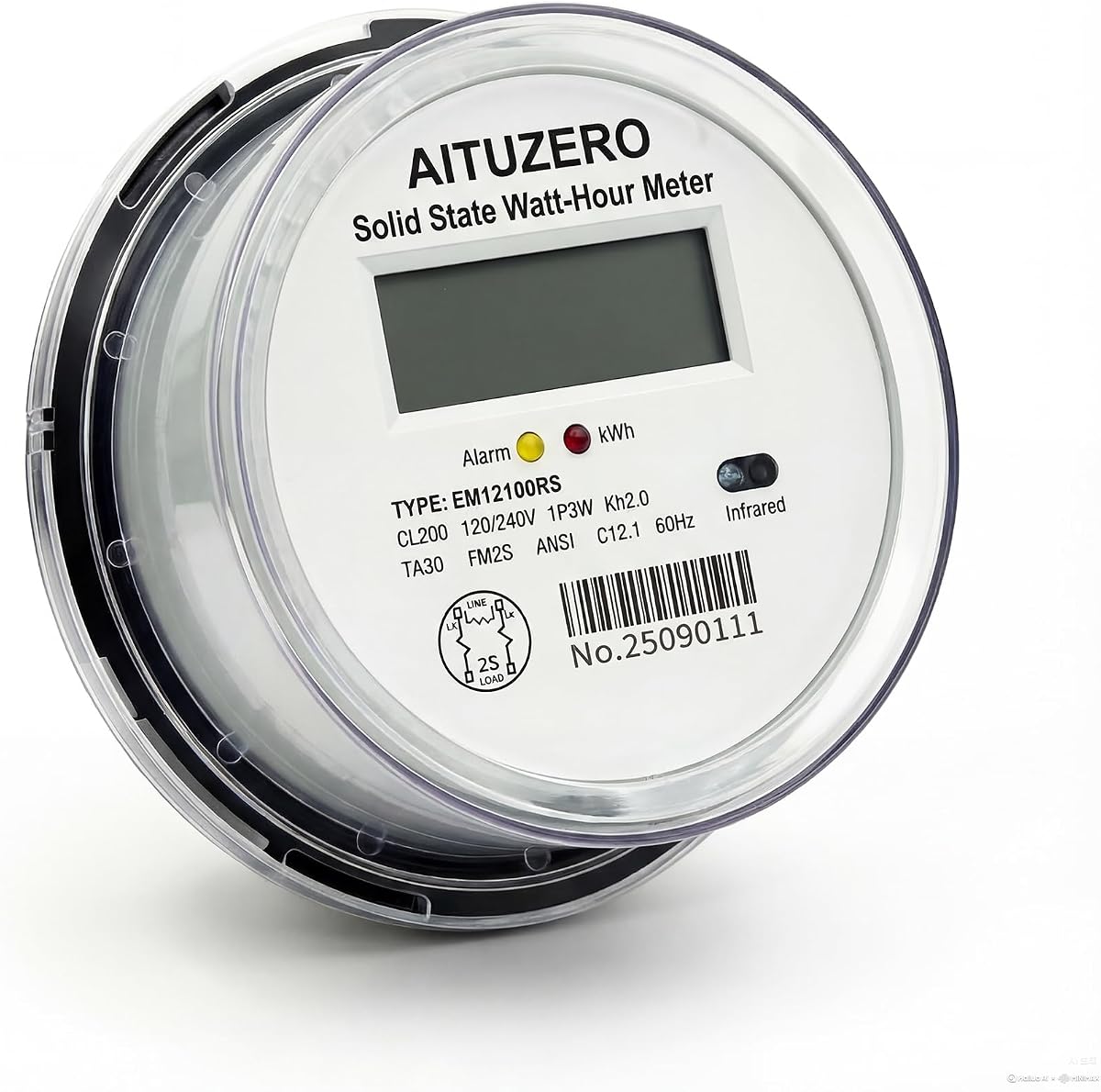


The Digital Electric Sub Meters ranks as the top choice for RV owners needing robust power monitoring. With a 4.5 star rating and ANSI Form 2S compatibility, it delivers accurate kWh tracking for rental units and recreational vehicles alike.
We may earn a commission when you buy through this link, at no additional cost to you.
This unit excels in sub-metering applications, allowing separate cost allocation for tenants or individual circuits. Its solid-state design ensures reliable performance even with heavy loads like HVAC systems, while the bright LCD displays real-time power flow clearly.
Installation is straightforward for those familiar with breaker panels, utilizing labeled terminals for line, load, and neutral connections. However, it lacks a wireless interface, meaning you must physically view the display rather than checking data remotely.
If you need a dependable way to monitor energy usage in RV parks or mobile homes, this meter offers the best balance of accuracy and durability. Its ability to integrate via Modbus makes it future-proof for more advanced setups.
The meter tracks import and export kWh, essential for hybrid off-grid systems where solar panels feed power back to the battery or grid.
EEPROM memory retains essential usage data during power cycles, ensuring your billing and consumption records remain intact even after outages.
We may earn a commission when you buy through this link, at no additional cost to you.
With a 4.8 star rating, this meter is tailored for high-precision energy tracking in residential and RV settings. Its ANSI C12.1 compliance ensures it meets industry safety and accuracy standards for critical power management.
We may earn a commission when you buy through this link, at no additional cost to you.
The standout feature is its triple resistance to dust, water, and pressure, making it ideal for outdoor RV pedestal installations exposed to harsh weather. The high definition display ensures you can read data clearly even in direct sunlight or dim conditions.
While it provides excellent local monitoring, it does not offer advanced communication features like Modbus found in other models. You will need to rely on the visual display for data rather than digital integration.
For RV park owners or frequent travelers wanting a rugged, accurate meter for their pedestals, this model is an excellent investment. It balances professional-grade reliability with straightforward, plug-and-play compatibility.
Boasting 0.5-level accuracy, this meter ensures your billing and usage data is trustworthy, reducing disputes over energy consumption.
The rugged housing protects internal circuitry from environmental stress, extending the lifespan of the unit in challenging conditions.
We may earn a commission when you buy through this link, at no additional cost to you.
At an affordable price, this plug-in meter provides exceptional value for RVers monitoring individual appliances. It tracks watts, kWh, volts, and amps with a clear backlit display that works day or night.
We may earn a commission when you buy through this link, at no additional cost to you.
The seven display modes allow you to cycle through various parameters like cost and power factor, giving you deep insights into energy usage. The adjustable backlight feature ensures you can see data without disturbing neighbors in dark campgrounds.
While it lacks hardwired capabilities, it is perfect for portable monitoring needs. However, the memory function only saves cumulative data, so you may need to manually reset if you want to start fresh sessions.
If you want to understand which appliances drain your battery or generator, this plug is the most cost-effective solution available. It is simple to use and requires no electrical expertise to set up.
You can set the backlight timer from 10 minutes to always on, providing flexibility based on your camping lighting conditions.
An overload warning protects your equipment if appliances exceed the power threshold, preventing potential damage or fire hazards.
We may earn a commission when you buy through this link, at no additional cost to you.
This 240V monitor is built for high-demand circuits, supporting up to 200A for heavy RV loads. It fits standard ANSI Form 2S sockets, making it a versatile choice for residential and RV upgrades.
We may earn a commission when you buy through this link, at no additional cost to you.
Its primary strength lies in reliable performance and durability. Stored energy data survives power outages, ensuring you never lose important consumption records. The backlit LCD ensures readability even in low-light utility rooms or garages.
While it excels at accurate tracking, it does not offer advanced connectivity like Modbus or Wi-Fi. This makes it less suitable for automated monitoring systems but perfect for manual billing or personal tracking.
For RV owners with large electrical needs or workshop setups, this unit provides the necessary capacity and reliability. It ensures you can monitor your high-load equipment without risking system overload.
Designed for systems up to 200A, it handles the demands of large RVs with multiple air conditioners and heavy appliances.
The standard socket fit ensures quick installation in existing meter bases without requiring custom modifications.
We may earn a commission when you buy through this link, at no additional cost to you.
This device combines essential surge protection with energy monitoring, offering peace of mind for expensive RV electronics. It displays real-time load health, helping you balance appliances to prevent tripping breakers.
We may earn a commission when you buy through this link, at no additional cost to you.
The internal temperature sensor is a unique safety feature that alerts you to overheating connections before they cause damage. With 16,000 Joules of defense, it sacrifices itself to save your RV systems from lightning or grid spikes.
Although the rating is lower due to complexity, the safety features are unmatched. However, it comes at a premium price compared to basic meters, which may be a consideration for budget-conscious travelers.
If your priority is protecting your RV from electrical damage while tracking usage, this protector is a wise investment. It adds a layer of safety that standalone meters cannot provide.
Continuous monitoring of internal heat adds a critical safety layer, warning you of dangerous connection conditions before they escalate.
With 16,000 Joules capacity, it acts as a powerful shield for your AC, fridge, and other sensitive electronics.
We may earn a commission when you buy through this link, at no additional cost to you.
This plug-in meter stands out for its ability to calculate actual electricity costs based on unit price. It tracks volts, amps, and total cost, helping you manage your budget while camping or at home.
We may earn a commission when you buy through this link, at no additional cost to you.
Built from fireproof ABS material, it offers durability and safety for daily use. The one-click reset function makes it easy to clear data between different usage sessions without needing special tools.
While the display auto-off feature saves energy, you must press a button to view data again. However, this is a minor inconvenience compared to the robust features offered at this price point.
For travelers who need to know exactly how much each appliance costs to run, this meter provides actionable financial insights. It turns raw energy data into practical budget information.
By setting your unit price, the monitor calculates the total bill cost, helping you manage daily energy expenses effectively.
The ABS construction ensures safety by being fireproof and drop-resistant, suitable for busy environments.
We may earn a commission when you buy through this link, at no additional cost to you.
This model offers advanced communication capabilities, making it ideal for tech-savvy users. It supports RS485 Modbus and pulse outputs, allowing seamless integration with gateways and professional monitoring systems.
We may earn a commission when you buy through this link, at no additional cost to you.
The import and export energy measurement is crucial for systems with solar panels, helping you balance production and consumption. The reverse current LED provides quick feedback on energy flow direction.
While it boasts high accuracy and robust features, it requires professional installation and configuration. For simple home use, this complexity might be unnecessary and increase setup time significantly.
If you are building a sophisticated home energy management system, this meter provides the connectivity you need. It bridges the gap between basic monitoring and industrial-grade tracking.
RS485 Modbus allows connection to data loggers and gateways, enabling centralized monitoring across multiple devices.
The meter measures power flow in both directions, essential for verifying solar backfeed and grid interaction.
We may earn a commission when you buy through this link, at no additional cost to you.
This meter is specifically designed for 240V 2-wire electrical systems, ensuring compatibility with certain RV pedestals and trailers. It offers a straightforward solution for clear kWh tracking without extra complexity.
We may earn a commission when you buy through this link, at no additional cost to you.
The clear digital display makes daily checks easy, even in dim conditions. Its sturdy housing ensures it stands up to everyday use, while the plug-in design supports convenient installation.
While it lacks advanced communication features, it excels at simple, accurate monitoring. This makes it perfect for RV owners who just want to track basic usage without dealing with network setups.
If your setup requires a 2-wire compatible meter, this unit provides exactly what you need. It is reliable, easy to read, and built to handle common power needs.
Ideal for users who need clear energy data without complex networking or configuration options.
Sturdy housing protects internal components, ensuring stable long-term usage in recreational environments.
We may earn a commission when you buy through this link, at no additional cost to you.
This model is engineered for 3-wire systems, meeting ANSI C12.1 industry specifications for safety and measurement accuracy. It offers high definition display readability for reliable daily monitoring in RVs and homes.
We may earn a commission when you buy through this link, at no additional cost to you.
Its triple dust, water, and pressure protection extends service life, ensuring stable operation even in dirty or humid environments. The TA30 current measurement capability covers most daily electrical demands effectively.
It lacks wireless communication but excels in local accuracy. For users prioritizing hardware quality over software features, this meter is a strong contender for professional-grade monitoring.
If your RV setup utilizes a 3-wire configuration, this meter ensures safety and compliance. It delivers professional performance with a user-friendly interface that makes data easy to interpret.
Meeting ANSI C12.1 standards ensures the meter adheres to strict electrical safety requirements.
The triple protection functions keep the unit working reliably in dusty or high-voltage fluctuation conditions.
We may earn a commission when you buy through this link, at no additional cost to you.
This hardwired meter uses a split-core transformer, allowing you to clamp around a conductor without cutting wires. It is ideal for DIY projects where panel access is available and you want permanent monitoring.
We may earn a commission when you buy through this link, at no additional cost to you.
Its wide voltage range of 80-260V makes it versatile for household, workshop, and RV generator circuits. The visual alarm alerts you instantly if loads exceed your preset threshold, helping prevent circuit trips.
While it offers robust protection, it requires more technical skill to install safely. If you are comfortable with basic electrical work, this provides a permanent, low-cost way to monitor power usage.
For builders or travelers needing a custom solution, this meter is a practical choice. It gives you direct insight into your circuit loads without complex wiring modifications.
Clamps around one live conductor, eliminating the need to cut or disconnect monitored wires during installation.
The backlight flashes when the preset power threshold is exceeded, providing a clear warning for load monitoring.
We may earn a commission when you buy through this link, at no additional cost to you.
Selecting the right meter involves considering your RV's electrical system type, your monitoring needs, and your budget.
Your meter must match your RV's voltage (120V, 240V, or 120/240V) and wiring type (2-wire or 3-wire). Check your pedestal or breaker panel specs to ensure compatibility before purchasing.
Always verify the voltage and wire count before buying to avoid installation issues.
Look for meters meeting ANSI C12.1 standards for reliable measurements. High precision ensures you aren't overcharged by park fees or billing systems.
Accuracy standards guarantee your readings are trustworthy for billing and management.
Decide between plug-in monitors for temporary use and hardwired or socket-based meters for permanent setups. Plug-in meters are easier to move but less robust.
Choose installation based on whether you need portable or fixed monitoring.
If you need remote data, look for Modbus, RS485, or smart interfaces. Basic models only display locally, which is sufficient for simple personal tracking.
Communication features are essential for automated energy management systems.
Outdoor meters should have dust and water resistance. A durable housing extends lifespan in harsh camping environments.
Ensure outdoor units are rated for weather exposure.
A backlit LCD is crucial for reading data at night or in shaded areas. Check for high-contrast screens to avoid squinting.
Bright displays improve usability in low-light conditions.
Some models include overload alarms or temperature sensors. These add extra protection for your RV systems and prevent electrical hazards.
Safety features can save money by preventing costly equipment damage.
Prices vary from budget-friendly plugs to premium surge protectors with metering. Determine how much functionality you need to balance cost against utility.
Set a budget that aligns with your required features.
For plug-in monitors, simply insert the unit into the outlet and plug your appliance into the meter. Ensure the meter's capacity matches your appliance's power draw to avoid overloading.
For hardwired meters, turn off the main breaker before installation. Follow manufacturer wiring diagrams carefully, connecting line and load terminals correctly to ensure accurate readings.
Regularly clean the display and housing to prevent dust buildup. If storing for long periods, remove the unit from any live circuit to preserve battery life.
Check your RV's electrical setup for voltage and wire count. Most modern RVs use 240V 3-wire systems. Look for meters with ANSI Form 2S compatibility to ensure a proper fit for pedestal upgrades.
Plug-in meters are designed for individual appliances. To monitor your entire RV, you need a hardwired meter installed in your breaker panel or sub-panel.
Many models store data during power outages. However, most require you to physically view the display unless they have Modbus or smart features.
Yes, most meters come with basic instructions. However, hardwired units often require professional installation to ensure safety and compliance with electrical codes.
2-wire meters handle 240V circuits with two hot lines, while 3-wire meters handle 120/240V split-phase systems with two hot lines and a neutral.
Most solid-state meters do not require regular calibration. Ensure they are installed correctly to maintain accuracy over time.
We reviewed ten excellent models ranging from simple plug-in monitors to professional-grade sub-meters. The Digital Electric Meter for RV & Home stands out for its accuracy and durability in RV pedestals.
Prioritize compatibility with your RV's voltage and wiring system. For advanced needs, consider models with Modbus support to integrate with broader smart home setups.
Prices and availability change regularly. Always check the latest listings to ensure you are getting the best value and current product specifications.