
Elgato Wave XLR MK.2
4.3Editor score
Ultra-Low-Latency Monitoring
Wave FX Processor
Touch Control with LED Feedback
This guide compares the top 10 audio interfaces with built in dsp features, evaluating latency, sound quality, and effects for recording and streaming
Modern music production and streaming demand tools that handle processing without taxing your computer. Audio interfaces with built in dsp provide real-time effects and mixing power directly on the hardware. This ensures low latency monitoring and reliable performance even during complex sessions.
We evaluated ten leading models based on conversion quality, onboard processing power, and connectivity options. Our analysis covers everything from compact USB-C units to high-end Thunderbolt solutions. Each product was assessed for its ability to deliver professional results in home and mobile setups.
Every pick in this list highlights unique strengths for specific user needs and budgets. Prices and availability change frequently so verify current details before purchasing. We aim to help you find the perfect interface that matches your creative workflow and technical requirements today.
4.3Editor score
4.7Editor score

4.0Editor score
This side-by-side comparison highlights key specifications across all ten selected interfaces. It helps you quickly identify which model offers the processing power and connectivity you need for your specific recording or streaming setup.




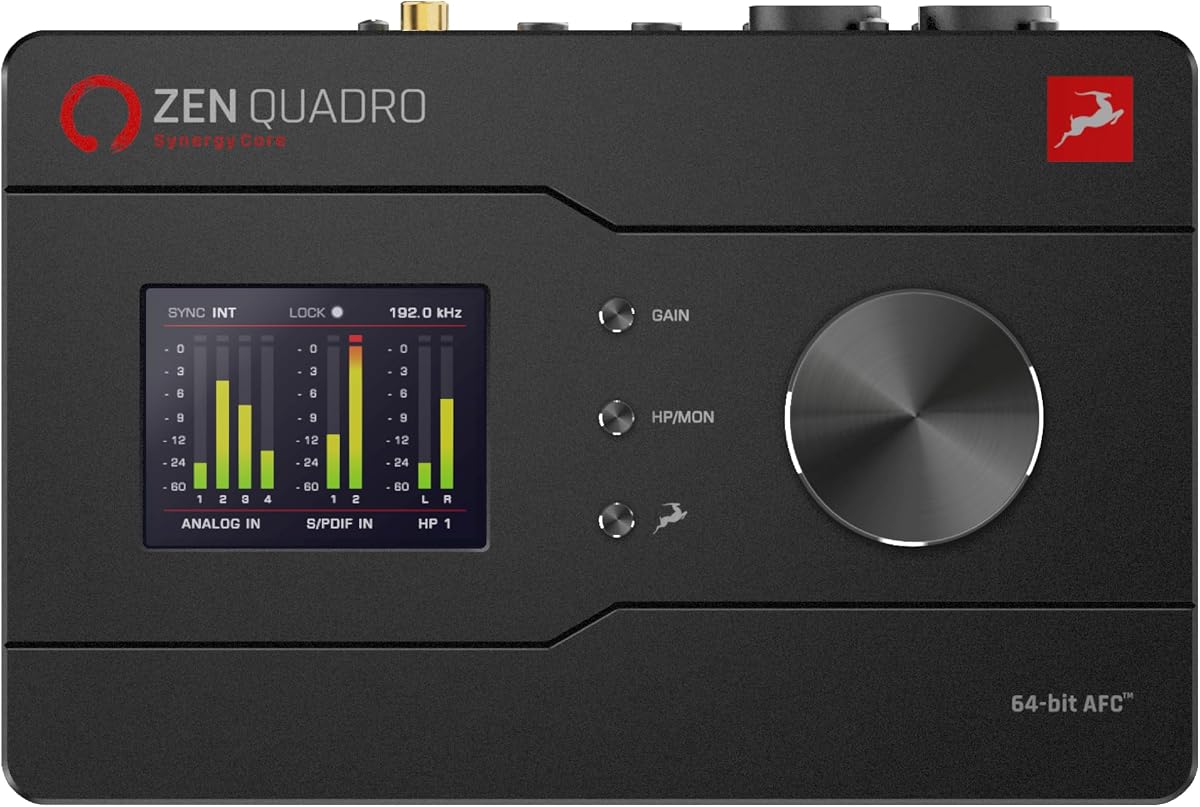
The Antelope Audio Zen Quadro stands out as a powerhouse for creators needing real-time effects without CPU load. It delivers professional sound quality with near-zero latency monitoring ideal for live performances or intricate studio sessions.
We may earn a commission when you buy through this link, at no additional cost to you.
Its real-time Synergy Core FX engine allows you to track through 37 included effects or explore 90+ more. This processing runs on dedicated DSP and FPGA hardware freeing your computer from the burden of heavy plugins during recording.
While the price reflects its premium features users might find the initial configuration detailed. However the ability to route audio between a computer and phone or tablet makes it uniquely versatile for modern workflows.
This interface is perfect for professionals who demand top-tier conversion and flexibility. It bridges the gap between portable setups and studio-grade performance making it a strong investment for serious audio work.
The 64-bit AFC clocking ensures precise synchronization reducing jitter for cleaner audio playback and recording.
Dual USB-C ports allow versatile connections including loopback for streaming or connecting two computers.
We may earn a commission when you buy through this link, at no additional cost to you.
The Elgato Wave XLR MK.2 offers a streamlined solution for streamers and podcasters needing simple but effective DSP. Its design focuses on ease of use allowing creators to shape their sound instantly without complex menus.
We may earn a commission when you buy through this link, at no additional cost to you.
With the Wave FX Processor you get onboard effects like a voice enhancer and compressor. These tools unify DSP effects and VST plugins in one signal chain making it easy to achieve polished audio before it hits the broadcast.
The touch control panel with LED feedback provides immediate visual cues for levels. While it lacks extensive expansion the included wave Link app offers precise routing and monitoring tailored for content creation workflows.
This unit is ideal for creators who want professional sound with minimal hassle. It delivers strong performance at a accessible price point making high-quality audio production more attainable for beginners.
Touch controls allow instant adjustments to levels and mute states without digging through software settings.
The 80dB gain ensures even quiet microphones receive ample amplification without introducing excessive noise.
We may earn a commission when you buy through this link, at no additional cost to you.
The Universal Audio Apollo Twin X QUAD represents the pinnacle of home studio interfaces with its UAD DSP ecosystem. It allows you to record through authentic emulations of classic hardware compressors and preamps in real time.
We may earn a commission when you buy through this link, at no additional cost to you.
Its Unison preamps provide low latency access to a massive library of 200+ DSP and native plug-ins. This means you can apply high-quality effects during recording rather than waiting for post-processing to clean up the sound.
While the price is significant the value comes from the sound quality and processing power. The Apollo Monitor Correction powered by Sonarworks helps you mix confidently in any room ensuring your mixes translate well.
This interface suits serious producers who need industry-standard tones without buying racks of outboard gear. It brings high-end studio capabilities to your desktop making it a versatile tool for professional production.
Unison technology lets you record through emulations of Neve API and Avalon preamps instantly.
Monitor Correction allows for precise acoustic treatment adjustments without needing physical room upgrades.
We may earn a commission when you buy through this link, at no additional cost to you.
The Focusrite Scarlett Solo 4th Gen brings big studio sound to wherever you make music. It features a huge dynamic range and converters found in flagship interfaces ensuring your recordings are clean and detailed.
We may earn a commission when you buy through this link, at no additional cost to you.
Its improved Air mode lifts vocals and guitars to the front of the mix adding musical presence. This feature helps beginners achieve a polished sound without needing extensive external processing or complex mixing skills.
Although it focuses on simplicity the software bundle adds significant value for new creators. It includes Pro Tools Intro Plus and other tools to help you start recording and mastering immediately.
This interface is perfect for songwriters and solo artists needing reliability and quality. It balances performance and price effectively making it a top choice for entry-level production.
The Air mode adds harmonic drive to recordings helping tracks cut through the mix naturally.
Included plugins and DAWs let you start creating music right away without extra purchases.
We may earn a commission when you buy through this link, at no additional cost to you.
The Universal Audio Apollo Twin X DUO offers a streamlined approach to powerful DSP mixing. It provides the same analog tones via Unison preamps found in the more expensive QUAD version making it versatile for most setups.
We may earn a commission when you buy through this link, at no additional cost to you.
You gain access to the full library of 200+ UAD DSP plug-ins including award-winning titles. This allows for real-time processing that would otherwise bog down your computer CPU during complex recording sessions.
Features like Auto-Gain help you set levels quickly across multiple inputs ensuring you never miss a take. The bass management option also lets you add a subwoofer to your monitor setup for better low-end control.
This model is excellent for producers needing professional tones without stepping up to the QUAD. It strikes a balance between performance and usability ideal for mid-level studios.
These preamps allow you to use high quality emulations of classic hardware during recording.
Adding a subwoofer ensures accurate low frequency monitoring for better mix translation.
We may earn a commission when you buy through this link, at no additional cost to you.
The Solid State Logic 2 MKII Plus delivers studio-quality sound with its 32-bit 192 kHz converters. It is designed for professionals who need precise audio quality and reliable performance in live or studio environments.
We may earn a commission when you buy through this link, at no additional cost to you.
Its Legacy 4K Analog Enhancement adds a distinctive tone to your recordings emulating classic SSL channel strips. This feature provides character and clarity that elevates vocals and instruments without additional processing steps.
With zero-latency monitoring you can hear yourself through effects without delay. While it lacks internal DSP the software bundle adds value for production tasks and it remains a robust choice for high fidelity recording.
This interface is perfect for those prioritizing conversion quality and tactile control. It offers a reliable way to capture pristine audio with the legendary SSL touch.
The 4K mode provides a signature tone that adds weight and presence to any mix.
Zero-latency monitoring ensures you hear your input instantly without distracting delays.
We may earn a commission when you buy through this link, at no additional cost to you.
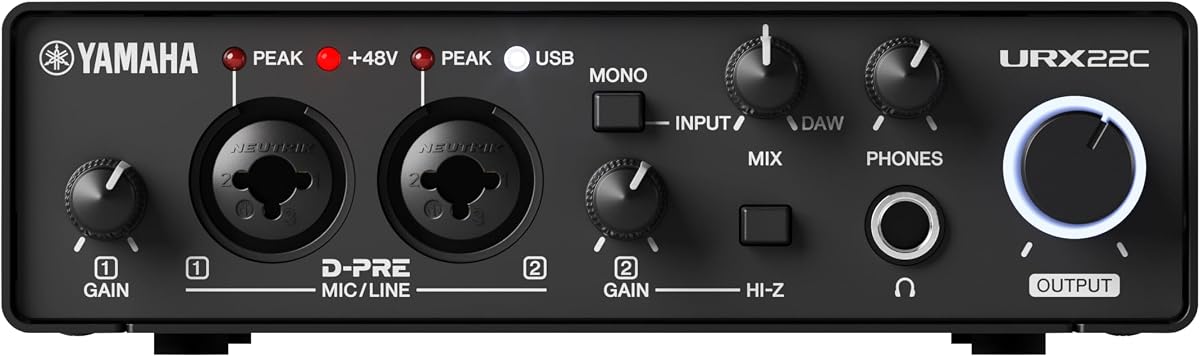
The Yamaha URX22C offers a complete package for musicians needing high-quality audio and DSP mixing. Its Class-A D-PRE preamps provide clean gain while the DSP-powered monitoring lets you access reverb and amp models directly.
We may earn a commission when you buy through this link, at no additional cost to you.
The included Steinberg software suite adds significant value for production. It includes Cubase AI and effects allowing you to start recording and mixing immediately without purchasing additional tools.
With support for 32-bit integer and 192 kHz audio this interface ensures detailed sound capture. The rugged metal housing makes it durable for mobile use and frequent transport to various recording locations.
This interface is ideal for producers who value integrated software and hardware. It combines reliability with the tools needed to create professional music efficiently.
These preamps offer transparent sound reproduction ensuring your recordings remain clean and accurate.
Cubase AI and effects come included providing a ready-to-use recording environment.
We may earn a commission when you buy through this link, at no additional cost to you.
The MOTU UltraLite-mk5 is a versatile hub capable of handling up to 40 simultaneous audio channels. It offers a comprehensive set of analog and digital inputs making it suitable for larger band sessions or multi-mic setups.
We may earn a commission when you buy through this link, at no additional cost to you.
Its DSP-driven monitor mixing allows you to create separate unique mixes for each output pair. This ensures musicians hear exactly what they need without affecting your main recording mix or host CPU.
The high-resolution OLED display gives you detailed metering for all analog I/O at a glance. Coupled with the CueMix 5 app you have precise control over your audio routing and signal levels.
This interface is perfect for producers needing expandability and flexible monitoring. It bridges the gap between compact interfaces and large console setups.
Multiple analog and digital inputs allow you to connect a wide variety of gear easily.
Six separate mix busses let you tailor monitor mixes for different performers in real time.
We may earn a commission when you buy through this link, at no additional cost to you.
The Yamaha URX22 B stands out with its 4.3-inch touchscreen interface allowing intuitive control over your audio. It features premium microphone preamps with a wide gain range ensuring high quality signal capture.
We may earn a commission when you buy through this link, at no additional cost to you.
Its built-in DSP processor provides professional sound and latency-free monitoring essential for live recording. The dual USB ports allow you to connect to multiple devices simultaneously offering great workflow flexibility.
Included software like Cubase Al and WaveLab Cast enhances its value for creators. This makes it a complete solution for those who want a modern touch-enabled interface with robust capabilities.
This unit is ideal for users who prioritize tactile control and modern features. It brings a new level of convenience to audio interfacing.
The screen allows quick adjustments to settings without digging through software menus.
Dual USB ports enable seamless switching between devices or simultaneous connections.
We may earn a commission when you buy through this link, at no additional cost to you.
The Antelope Audio Zenith 2 is a portable powerhouse designed for streaming and podcasting. It features world-class audio clarity with 123 dB conversion ensuring your voice and instruments sound pristine.
We may earn a commission when you buy through this link, at no additional cost to you.
Its virtual guitar rig includes a full studio-grade signal chain with noise gates and amp simulations. This allows musicians to record direct with zero latency using onboard DSP to avoid CPU strain.
Unique independent headphone mixes allow different monitoring setups for guests or collaborators. The colorful display offers personalized control making it easy to navigate settings during a live session.
This interface is perfect for content creators needing professional sound in a portable package. It combines high-end audio with essential tools for live broadcasting.
Integrated loopback and vocal chains simplify live audio production for broadcast.
32bit 192 kHz conversion captures every nuance of your performance.
We may earn a commission when you buy through this link, at no additional cost to you.
Selecting the right audio interface with DSP requires considering your specific workflow and budget. This guide breaks down the key factors to help you make an informed decision.
The core benefit of these interfaces is onboard processing. Look for interfaces that offer enough DSP channels to run your needed effects without taxing your computer. This ensures stable performance during heavy production tasks.
Prioritize models with dedicated hardware for effects to achieve zero latency monitoring.
Check whether the interface uses USB, Thunderbolt, or other standards. Thunderbolt offers higher speeds for large audio streams while USB provides broader compatibility. Ensure you have the right ports on your computer.
Consider dual USB-C options for flexible workflow between multiple devices.
Determine how many inputs and outputs you need now and in the future. A 2-in/2-out unit works for solo artists while larger setups need more channels. Check for expandability via ADAT or S/PDIF.
Choose a unit that meets your current needs while leaving room for growth.
High dynamic range and low distortion are essential for professional results. Look for interfaces with high sample rates like 192 kHz and deep bit depths to capture detail accurately.
Investing in good conversion hardware pays off in the clarity of your recordings.
Many interfaces include DAW software or plugins that add value. Some brands have extensive libraries of DSP plug-ins that can be used across their product lines.
Consider how much the included software contributes to your overall production workflow.
Interfaces with intuitive controls or touchscreens can save time. A clear display and physical knobs help you adjust settings quickly during recording or live performance.
Opt for a design that matches your comfort level with technology.
If you record on the go choose a bus-powered unit that fits easily in a bag. Portable interfaces allow you to capture high quality audio anywhere without heavy hardware.
Look for rugged builds if you travel frequently with your gear.
Prices vary widely based on features and build quality. Determine how much you are willing to spend to get the specific DSP capabilities you require.
Sometimes a mid-range model offers the best balance of cost and performance.
Connect your microphone or instrument to the appropriate input. Set the gain knob until the signal peaks around -6 dB to avoid distortion while maintaining a healthy signal level.
Launch the manufacturer's software to configure DSP settings. Enable monitoring modes that allow you to hear your voice with effects applied before you record to ensure satisfaction.
Protect your device from dust and moisture when not in use. Keep cables organized to prevent wear and tear. Update firmware regularly to access new features and performance improvements.
The main advantage is the ability to process audio effects like reverb and EQ in real-time without using your computer's CPU. This results in near-zero latency monitoring ensuring you hear your processed sound instantly while recording.
Most interfaces work with standard Windows and Mac computers. However high-end models may require Thunderbolt connections or specific drivers. Check compatibility requirements before purchasing to ensure seamless integration.
Many modern interfaces support iOS and Android devices via USB-C or adapters. This enables professional recording on tablets and phones making it easy to create content on the go.
DSP processing offloads work from your computer CPU ensuring stability during complex projects. While software plugins are flexible DSP offers consistent performance without lag especially when running multiple effects simultaneously.
Firmware updates are usually available through the manufacturer's control panel software. Download the latest version and follow the on-screen instructions to install it. Always backup your settings before updating to avoid data loss.
With proper care these interfaces can last many years. They are built to withstand regular studio use. Regular software updates ensure they remain compatible with modern systems for a long time.
The ten interfaces reviewed offer a wide range of capabilities for every type of creator. From the portable Antelope Audio Zenith 2 to the powerful Universal Audio Apollo Twin X QUAD there is a model suited to your needs.
Prioritize features that matter most to your workflow such as channel count conversion quality or software ecosystem. The right choice depends on whether you are streaming or recording full band sessions.
Remember that prices and availability fluctuate so check current deals before finalizing your purchase. We hope this guide helps you find the perfect interface to elevate your audio production today.