
ASRock Motherboard Micro ATX DDR3 1066 NA D1800M
4.0Editor score
Includes Intel J1800 Processor
Supports up to 16GB RAM
Multiple USB and video ports
This guide compares the top low power motherboard options for efficient builds, NAS servers, and home systems featuring modern connectivity and stable
Finding the right low power motherboard is essential for building energy efficient systems that run quietly and coolly. These boards are designed to minimize heat output while delivering reliable performance for everyday tasks and specialized applications like networking or storage.
We have carefully evaluated a wide range of models based on their power consumption, feature sets, and overall reliability. Our list includes options suitable for compact home servers, mini PCs, and professional appliances that require constant operation without excessive energy costs.
Each selection highlights key specifications and practical benefits to help you make an informed decision for your specific needs. Please note that availability and pricing may change over time, so verify details before finalizing your purchase to ensure you get the best current offer.
4.0Editor score

4.5Editor score

4.1Editor score
This side by side comparison reviews the ten best low power motherboards available today. Each entry highlights essential specifications and features to help you quickly identify the most suitable platform for your energy efficient computing needs.



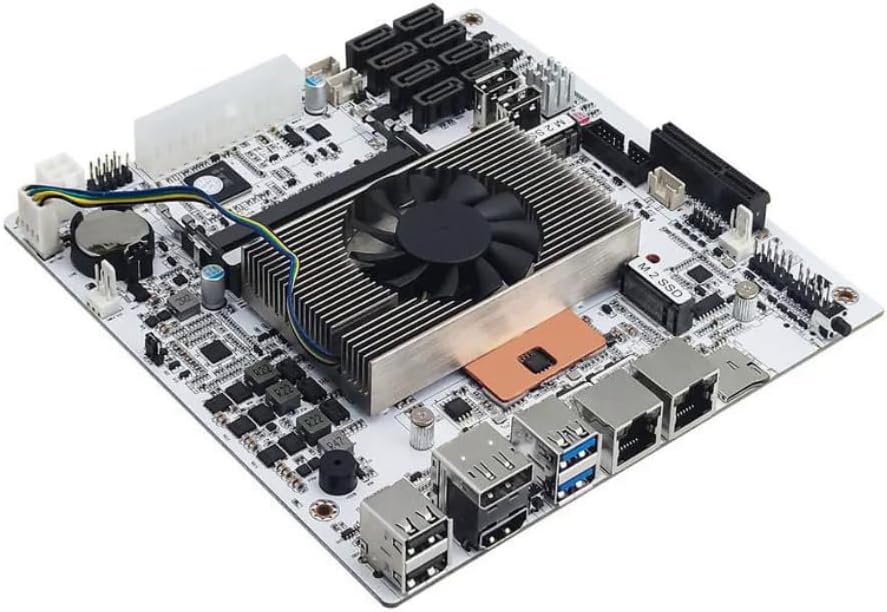
This board stands out as a top contender for energy efficient network and storage solutions. It features a low power Intel Celeron N5105 processor which provides ample performance for multitasking without generating excessive heat. The industrial design ensures durability for 24/7 operation in home or small office environments.
We may earn a commission when you buy through this link, at no additional cost to you.
Its most compelling feature is the inclusion of four 2.5GbE network ports which allows for high throughput network setups. This is ideal for building a robust firewall or a high performance NAS appliance. Additionally the board supports up to 32GB of DDR4 RAM which is sufficient for virtualization tasks and heavy workloads.
While the board is powerful it does require both 24PIN and 4PIN power connections which might be complex for beginners. Furthermore users should be prepared for a few minutes of memory reading during the first boot. These are minor trade-offs given the extensive connectivity and performance capabilities offered.
This motherboard is highly recommended for users building a home server or network appliance that demands reliability and speed. Whether you are running a media center or a private cloud the low power consumption and robust networking make it an excellent choice for long term use.
The four 2.5GbE ports provide superior bandwidth for data transfers and network virtualization tasks.
With six SATA ports and two M.2 slots you can configure extensive storage arrays for media or backups.
We may earn a commission when you buy through this link, at no additional cost to you.
This model offers an exceptional entry point for users seeking a compact and affordable system. The included Intel J1800 processor makes it a ready to run solution for basic computing tasks. It is ideal for digital signage or lightweight home office setups where power savings are a priority.
We may earn a commission when you buy through this link, at no additional cost to you.
The board supports dual channel DDR3 memory allowing for up to 16GB of RAM which is adequate for general use. It also provides a variety of video outputs including HDMI and VGA ensuring compatibility with older displays. The single Gigabit Ethernet port is sufficient for standard internet connections.
The main limitation is the reliance on older DDR3 technology which may not suit future upgrade paths. Additionally the processor is dual core and might struggle with heavy multitasking. However for a budget build these constraints are often acceptable given the low cost and ease of use.
Buyers looking for a simple no fuss motherboard for a secondary PC or media streamer should consider this option. It delivers solid performance for everyday tasks while keeping energy consumption and costs to a minimum.
Being sold with an included processor reduces the total cost of building a small form factor PC.
HDMI and VGA ports allow connection to a wide range of monitors and projectors.
We may earn a commission when you buy through this link, at no additional cost to you.
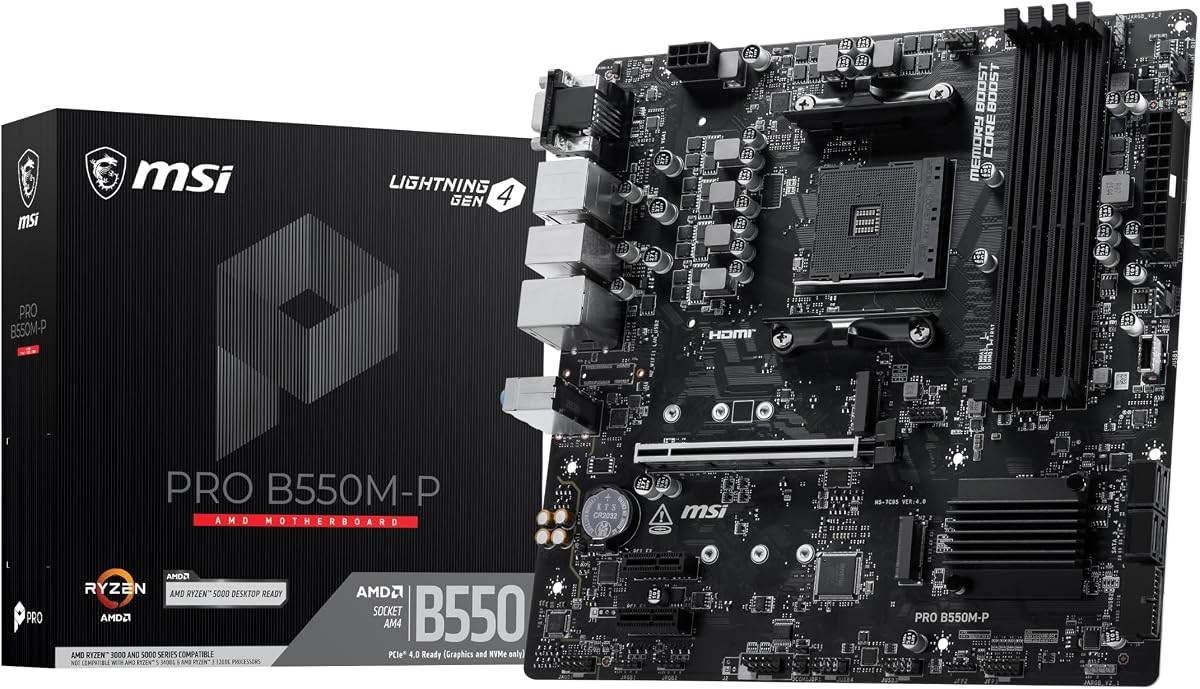
This motherboard provides a strong balance between performance and efficiency for AMD users. It supports the Ryzen 5000 series which offers excellent single core performance and efficiency. The 3+3 power phase design ensures stable power delivery even under moderate loads.
We may earn a commission when you buy through this link, at no additional cost to you.
Key features include support for DDR4 memory with XMP profiles allowing for fast data access. The board includes two M.2 slots with one supporting PCIe 4.0 which is ideal for fast NVMe storage. This makes it a great choice for gaming or content creation where speed is critical.
The lack of built-in WiFi means users must rely on Ethernet or add a card if wireless is needed. Also the audio hardware is standard and may not satisfy audiophiles. Despite these points the board offers a solid foundation for a reliable and responsive system.
Those planning to build a PC with an AMD processor will find this board offers great value. It allows for easy upgrades to newer CPUs and provides the necessary connectivity for modern peripherals.
Supports Ryzen 5000 series processors for excellent performance in multitasking and gaming.
PCIe 4.0 M.2 slots allow for ultra-fast SSD speeds to reduce load times.
We may earn a commission when you buy through this link, at no additional cost to you.
This board is designed for users who need stability and performance for demanding applications. The Core Boost technology optimizes power delivery to ensure smooth operation with Ryzen processors. It supports high speed DDR4 memory which enhances overall system responsiveness.
We may earn a commission when you buy through this link, at no additional cost to you.
The Frozr AI cooling feature automatically adjusts fan speeds based on system temperatures. This helps maintain low noise levels while preventing overheating during intensive tasks. Storage is handled by two M.2 slots one of which supports PCIe 4.0 for maximum speed.
While it lacks integrated WiFi users can easily add a card if needed. The basic rear panel layout is functional but could include more USB ports. Overall the board provides a reliable platform for those who value performance and thermal management.
Ideal for builders looking for a balance of features and cost this board handles both gaming and productivity well. The AI cooling system is a standout feature for maintaining a quiet environment.
Automatically adjusts system fans to optimize thermal performance and noise levels.
Memory boost technology supports speeds up to 4400+ MT/s for improved data throughput.
We may earn a commission when you buy through this link, at no additional cost to you.
This board focuses on providing a compact and energy efficient solution for small form factor builds. The quad-core J4125 processor delivers enough power for web browsing and media playback. It is well suited for living room PCs or portable workstations.
We may earn a commission when you buy through this link, at no additional cost to you.
It supports DDR4 memory which offers better speed and capacity options than older standards. The PCIe 2.0 x16 slot allows for basic expansion such as adding a network card or capture device. The M.2 Key E slot is convenient for adding wireless capabilities.
However the board lacks integrated network ports which means you must add a card for internet access. This adds complexity and cost to the build. Also the connectivity options are limited compared to full size boards.
If you are building a small PC where size is critical and you can manage external network cards this board is a viable choice. It is simple and effective for basic computing needs.
Designed to fit in tiny cases making it perfect for hidden installations.
The Key E slot allows easy addition of WiFi modules for connectivity.
We may earn a commission when you buy through this link, at no additional cost to you.
This model offers a versatile platform for AMD builders seeking cost effective performance. It supports a wide range of Ryzen processors allowing for flexible choices based on budget and needs. The 6 power phase design ensures stable power for efficient operation.
We may earn a commission when you buy through this link, at no additional cost to you.
Memory support is excellent with speeds up to 4733+ OC available for responsive multitasking. It includes legacy display outputs like D-Sub which is helpful for older monitors. The Gigabit LAN provides reliable wired internet connectivity for home networks.
The board does have a limited number of rear USB ports which may require headers for extra devices. The VRM heatsink is basic and may limit heavy overclocking. However for standard use it is robust and reliable.
Great for users who want a reliable board for office or home use without breaking the bank. It provides essential modern features while maintaining low power consumption.
D-Sub HDMI and DVI-D ensure compatibility with various monitor types.
Full Spike Protection guards ports from electrical surges to extend lifespan.
We may earn a commission when you buy through this link, at no additional cost to you.
This mini ITX board is perfect for building a small and capable system. It features direct 6 phase digital PWM which provides stable power delivery for Ryzen processors. The Intel WiFi and Bluetooth integration saves space and reduces cable clutter.
We may earn a commission when you buy through this link, at no additional cost to you.
The 55A DrMOS power stages are robust for a small board ensuring efficient power use. Q Flash Plus allows BIOS updates without a CPU installed which is a helpful safety feature. Display options include DP and dual HDMI for multi screen setups.
The A520 chipset does not support CPU overclocking which might limit enthusiasts. There is also limited room for additional PCIe devices due to the small size. Despite this it is a strong choice for compact home theater or office PCs.
If you need a tiny system that stays cool and quiet this board is an excellent choice. It brings modern connectivity like WiFi and fast storage to small cases.
Built in Intel WiFi and Bluetooth provide seamless connectivity without extra cards.
Q Flash Plus lets you update the BIOS using a USB drive and power button.
We may earn a commission when you buy through this link, at no additional cost to you.
This board combines modern features with high efficiency for a smooth user experience. The 8 phase power design ensures stable performance under load without excessive heat generation. Wi-Fi 6E support provides fast wireless speeds and low latency for gaming.
We may earn a commission when you buy through this link, at no additional cost to you.
It offers four DDR4 slots with speeds up to 4733+ allowing for heavy multitasking. The audio codec delivers immersive sound suitable for entertainment systems. With eight USB 3.2 ports there is plenty of connectivity for peripherals and drives.
The price is slightly higher than basic models but the included WiFi and audio features save extra costs. Some users may want redundant Ethernet but the single port is usually sufficient. Overall it is a premium choice for home systems.
Perfect for users who want a wireless ready board without sacrificing performance or audio quality. It offers a complete solution for modern computing needs.
Wi-Fi 6E access to the 6GHz band for faster and less crowded wireless.
Realtek ALC1220 provides high fidelity sound for movies and music.
We may earn a commission when you buy through this link, at no additional cost to you.
This board is engineered for demanding server and virtualization tasks. The 8th gen U-series CPU delivers eight threads for running multiple applications smoothly. Its low 15W TDP ensures it runs cool even in confined spaces.
We may earn a commission when you buy through this link, at no additional cost to you.
Storage capacity is vast with eight SATA ports allowing for large NAS builds. Dual 2.5GbE LAN ports provide high bandwidth for network storage traffic. The industrial design features a moisture resistant PCB for durability.
Users should note a known sleep mode bug and the need for both 24PIN and 4PIN power connectors. Initial memory read time on boot can also take a few minutes. These issues are minor for a server that rarely sleeps.
Ideal for advanced users building a firewall or storage appliance that needs reliability. The performance and connectivity options are unmatched in this low power category.
VT-x and VT-d support ensures smooth running of virtual machines on the board.
Eight SATA ports allow building large RAID arrays without extra cards.
We may earn a commission when you buy through this link, at no additional cost to you.
This board is specifically designed for network attached storage systems. The Core i5 8265U CPU provides strong performance for media transcoding and data processing. It includes eight SATA ports for building a robust 8-bay storage array.
We may earn a commission when you buy through this link, at no additional cost to you.
Dual M.2 NVMe slots allow for caching to speed up access to frequently used files. The dual 2.5GbE LAN supports link aggregation for high throughput data transfers. It supports virtualization passthrough which is useful for advanced networking tasks.
Users must accept that sleep mode is not supported as the system is meant for 24/7 operation. Powering the board requires both 24PIN and 4PIN connections which adds to setup complexity. These trade-offs are acceptable for a dedicated storage server.
This is a top choice for users building a custom NAS with high capacity and performance requirements. It offers the connectivity needed for modern home data centers.
Eight SATA ports allow for maximum storage capacity without external drives.
Dual LAN ports provide backup and higher throughput for storage networks.
We may earn a commission when you buy through this link, at no additional cost to you.
Selecting the right low power motherboard requires understanding specific technical factors that impact efficiency and functionality.
The processor is the heart of the system and determines how much power it consumes during operation. Look for CPUs with low thermal design power ratings such as 15W or less for optimal energy savings. These processors often use advanced architectures that balance performance with battery life.
Focus on modern low power chips that support virtualization and hardware acceleration for specific tasks like video playback.
Ensure the motherboard supports memory types that fit your performance needs and budget. DDR4 or DDR5 modules offer better speed and efficiency than older standards. Check the maximum capacity supported to avoid needing upgrades later.
Choose boards with dual channel memory support to maximize bandwidth for faster data processing.
The number and type of storage ports determine how many drives you can connect to your system. SATA and M.2 NVMe slots offer different speeds and form factors so select based on your usage. More ports allow for larger data arrays and better expansion.
Prioritize NVMe support for faster boot times and application loading if speed is a priority.
For network heavy tasks look for boards with high speed Ethernet ports such as 2.5GbE or higher. Multiple LAN ports are useful for firewall or NAS setups where traffic needs to be segregated. Wi-Fi capabilities can also be beneficial for wireless flexibility.
Check if the board includes integrated wireless modules to save space and cost in your build.
The physical size of the motherboard determines the type of case you can use for your system. Mini ITX is ideal for compact builds while micro ATX offers more expansion options. Ensure the case you choose matches the board dimensions.
Consider how the form factor impacts your ability to fit all components and cooling solutions.
Some low power boards require multiple power connectors such as 24PIN and 4PIN to operate correctly. Verify that your power supply has the necessary cables to avoid compatibility issues. Proper power delivery is crucial for system stability.
Plan your power connections before purchasing to ensure your power supply meets the requirements.
Select a board with video ports that match your monitor requirements for seamless display connectivity. HDMI and DisplayPort support modern resolutions and refresh rates while VGA supports older devices. Having multiple outputs allows for multi monitor configurations.
Ensure the outputs support the resolution and refresh rate you need for your specific use case.
PCIe slots allow you to add cards for Wi-Fi or additional storage if the board lacks them. The version of PCIe available affects the speed of these expansions significantly. Ensure there is at least one usable slot for future upgrades.
Check if the slots operate at full speed or are shared with other components to avoid bottlenecks.
Begin by installing the motherboard in a compatible case and connecting the power supply. Ensure all cables are securely attached especially if dual power connectors are required for proper booting.
Install the latest BIOS from the manufacturer to ensure compatibility with modern components. This step can resolve boot issues and improve system performance for your low power setup.
Monitor temperatures regularly to ensure the cooling system is efficient. Clean dust from vents and fans periodically to maintain airflow and prevent heat buildup in tight enclosures.
Low power motherboards use processors and circuits designed to consume less energy during operation. They often feature efficient voltage regulation and modern chipsets that reduce heat output significantly.
Yes many low power boards support newer generations of processors that focus on efficiency. Check the supported CPU list on the manufacturer page for compatibility details.
While not built for high end gaming they can handle casual titles. For better gaming performance look for boards with dedicated graphics support and faster memory.
Yes industrial grade boards are built for continuous use. Look for models with solid caps and thermal protection for long term reliability.
These boards often use standard power supplies but some require specific connectors like 4PIN. Check your power unit has the right cables for the motherboard.
No many low power boards do not include built in WiFi. You may need to add a card or use an external USB adapter for wireless connectivity.
Check the motherboard specifications for supported RAM types and speeds. Using unbuffered non ECC memory is usually required for these consumer grade boards.
Yes most boards support RAM upgrades and PCIe cards. Ensure the case allows enough space for any additional components you plan to add.
This guide has reviewed ten excellent low power motherboards suitable for various builds from home servers to media centers. Each option offers unique features tailored to different needs and budgets.
Prioritize factors like power efficiency and connectivity when making your final decision. The right board ensures your system runs cool and quietly for years to come.
Remember to check current prices and availability before purchasing to secure the best value for your investment today.