
EBOOT 30 Pieces Photoresistor
4.6Editor score
Thirty pieces included for projects
5mm GM5539 resistor size
Low cost high value option
This guide compares the top 10 light sensors for Arduino projects including photoresistors photodiodes and digital modules to help you choose the right device
Light sensors are essential components for many Arduino projects allowing your microcontroller to perceive and react to ambient conditions. Whether you are building a smart home automation system or a simple night light, choosing the right sensor ensures accurate readings and reliable performance.
We have evaluated ten highly rated options based on accuracy, ease of use, compatibility with common boards like Arduino and ESP32, and overall value. Each product was selected for its ability to deliver consistent data across various lighting environments and project complexities.
Each pick highlights key features and potential use cases so you can quickly identify the best fit for your specific application. Please note that product availability and pricing may change over time so always verify details before purchasing.
4.6Editor score

4.4Editor score
5.0Editor score
The following table provides a side by side overview of each sensor module highlighting key specifications and unique attributes to simplify your selection process.


The WWZMDiB 6 Pcs module offers a robust solution for detecting ambient light changes. It integrates a 5MM LDR with an LM393 comparator to provide reliable digital switching alongside analog readings. Its performance makes it a top choice for general purpose Arduino projects.
We may earn a commission when you buy through this link, at no additional cost to you.
Users appreciate the inclusion of a potentiometer which allows precise tuning of the detection threshold. This feature ensures the sensor activates only when specific light levels are reached reducing false triggers. The clean waveform output simplifies integration into complex circuits.
While the module is highly effective it requires some understanding of comparator logic to maximize its potential. The potentiometer adjustment can be finicky for beginners but offers fine control for advanced users. Overall the trade-off is minimal compared to the functionality provided.
This sensor is ideal for makers building automated lighting systems or security alarms. It balances cost and performance effectively making it a standout option in this roundup. We recommend it for anyone needing a versatile light detection module.
The built-in potentiometer lets you set exact light levels for triggering actions.
Access both digital and analog signals for greater project flexibility.
We may earn a commission when you buy through this link, at no additional cost to you.
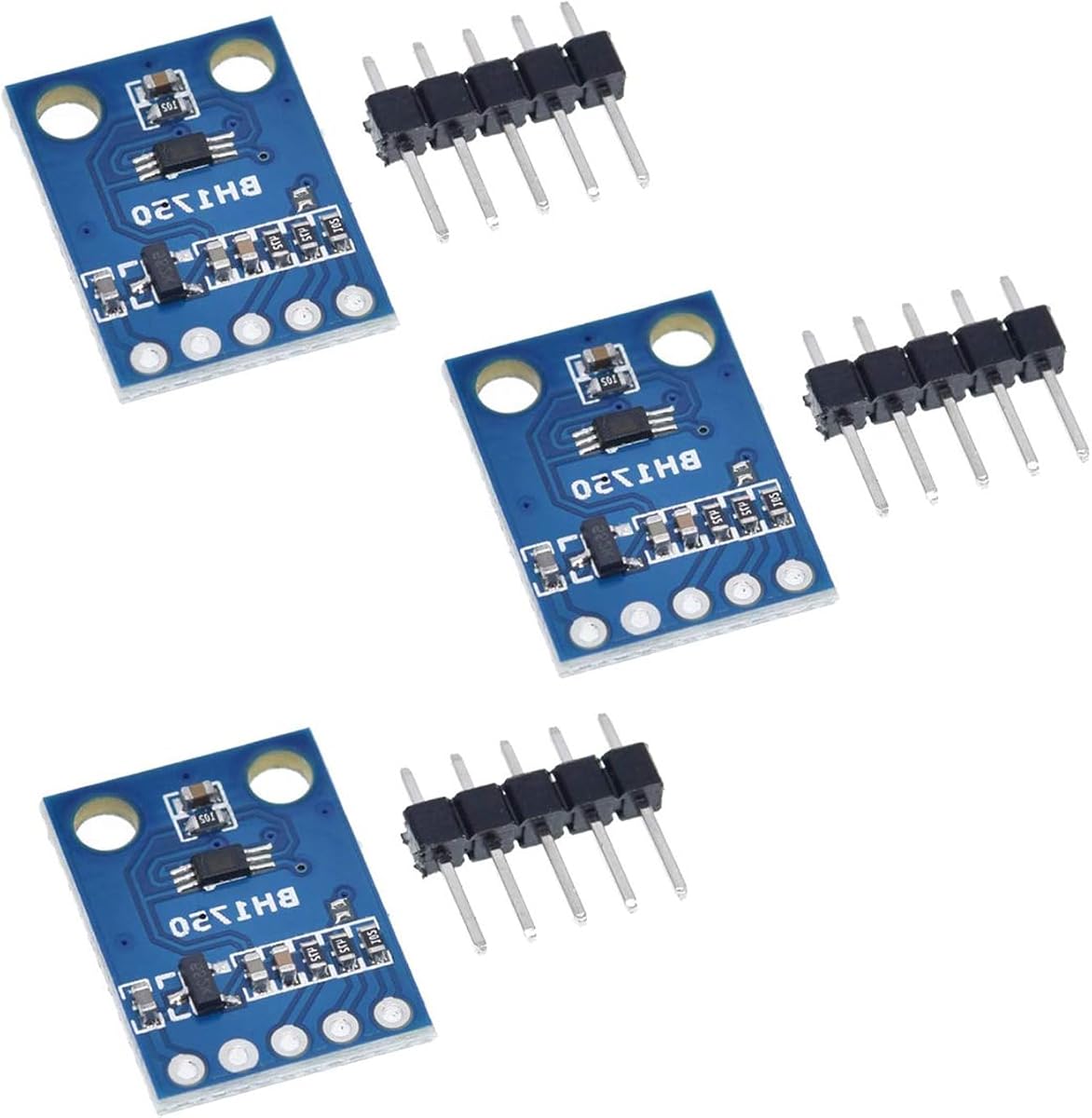
The GY-302 BH1750 module stands out for its precision digital light measurement capabilities. It uses a high-quality chip to convert light intensity into digital values eliminating the need for analog calibration. This makes it perfect for projects requiring exact lux readings.
We may earn a commission when you buy through this link, at no additional cost to you.
Its compact size allows easy integration into tight spaces on PCBs or breadboards. The I2C interface simplifies wiring as it requires only two data lines. Users benefit from three units in one package ensuring spares for larger builds.
While it demands a bit more initial setup than simple resistors the accuracy gained is significant. The required library is well documented making the learning curve manageable. It is a worthwhile investment for precise control projects.
This sensor is best suited for applications like automatic screen dimming or scientific light monitoring. It offers professional grade performance at a budget friendly price point. We highly recommend it for digital focused Arduino implementations.
Get exact light intensity values without manual calibration steps.
Its small size fits easily into compact project enclosures.
We may earn a commission when you buy through this link, at no additional cost to you.
HiLetgo provides a trusted alternative for the GY-302 module with guaranteed original chipset quality. This ensures consistent performance across the three units included. It is designed for reliable illumination monitoring in diverse environments.
We may earn a commission when you buy through this link, at no additional cost to you.
The module connects seamlessly to microcontrollers via I2C reducing pin usage. Its compact dimensions make it suitable for portable devices where space is limited. Users report stable readings even under fluctuating light conditions.
This product mirrors the functionality of similar modules but offers reliable quality assurance. It may require importing specific libraries for full functionality but this is standard for digital sensors. The packaging ensures protection during shipping.
Ideal for makers who value component reliability and consistent batch performance. It works well for smart home sensors or weather stations. We suggest this for projects needing multiple identical sensors.
Original ROHM chips guarantee consistent accuracy across all units.
Use two wires for data transmission saving pin resources.
We may earn a commission when you buy through this link, at no additional cost to you.
This photodiode module is designed for directional light detection rather than general ambient sensing. It excels in scenarios where you need to detect a specific light source like a beam or a spotlight. The directional nature improves accuracy for targeted applications.
We may earn a commission when you buy through this link, at no additional cost to you.
The sensitivity is adjustable via a blue digital potentiometer allowing custom tuning. Its compact PCB size includes fixing bolt holes for secure mounting. You get ten units in the package offering great value for multi-point sensing arrays.
While it does not measure general room lighting as well as photoresistors it is superior for directed tasks. The wiring is straightforward with clear VCC GND and output pins. Users should account for the need of direct light exposure.
Best used for security beams or line following robots where direction matters. It offers a specialized function not found in standard light sensors. We recommend it for specific industrial or security automation needs.
Detects light from a specific angle for precise triggering.
Includes screw holes for stable installation in enclosures.
We may earn a commission when you buy through this link, at no additional cost to you.
The EBOOT 30 Pieces pack provides a large supply of raw photoresistors for extensive projects. Each unit is a standard 5mm GM5539 component which is easy to integrate into circuits. It is the most cost effective option for beginners stocking up.
We may earn a commission when you buy through this link, at no additional cost to you.
With thirty pieces you can experiment with multiple designs without worrying about running out. The components handle standard voltages and wattages safely. They are ideal for custom designs where a module is not necessary.
These resistors require external wiring to function which adds a step to setup. You will need to add a resistor to create a voltage divider for reading values. However this offers more flexibility for custom PCB design.
This pack is perfect for classrooms or workshops needing many sensors. It supports DIY efforts with reliable basic components. We suggest it for those comfortable with basic soldering and circuit theory.
Enough resistors for building multiple projects simultaneously.
Integrate into your own PCB designs without board constraints.
We may earn a commission when you buy through this link, at no additional cost to you.
The Teyleten Robot pack offers ten ready to use light sensor modules. Each module is designed to detect ambient light and trigger digital outputs directly. It is built for reliability in environments needing multiple trigger points.
We may earn a commission when you buy through this link, at no additional cost to you.
The output can drive a relay module directly enabling automatic light operated switches. This simplifies wiring for projects like street lights or garden security. The three pin interface keeps connections straightforward.
These modules are practical for bulk deployments but use standard potentiometers. Users should ensure the power supply matches the module voltage requirements. The digital signal is clean and easy for microcontrollers to read.
Suitable for farms or homes needing many light sensors. It balances ease of use with functionality effectively. We recommend it for projects requiring multiple light triggered events.
Directly control high power devices like bulbs with output.
Ten units allow wide area light monitoring quickly.
We may earn a commission when you buy through this link, at no additional cost to you.
This kit includes four digital light sensors optimized for Arduino and ESP32. It comes with tutorials to help beginners get started quickly. The adjustable threshold ensures the sensor responds only when you want it to.
We may earn a commission when you buy through this link, at no additional cost to you.
The modules provide both digital and analog pins giving you flexibility. You can use analog for detailed measurements or digital for simple switches. Voltage support for 3.3V and 5V makes it versatile for different boards.
Tutorials are a strong point for education but the potentiometer is small. Be careful when adjusting to avoid stripping the screw. Overall it is a solid choice for learning and prototyping.
Great for hobbyists wanting multiple sensors with documentation support. It reduces setup time significantly. We suggest it for new users of Arduino ecosystems.
Tutorials included speed up the learning curve for beginners.
Work with 3.3V or 5V boards without extra logic.
We may earn a commission when you buy through this link, at no additional cost to you.
This product offers fifty GL5516 photoresistors making it excellent for large scale projects. The high dark resistance ensures clear distinction between light and dark states. It is ideal for solar tracking or lighting automation.
We may earn a commission when you buy through this link, at no additional cost to you.
The sheer volume allows testing multiple configurations or distributing parts. These resistors are standard and easy to find replacements for. They work well with microcontrollers when wired with pull down resistors.
Users must solder them into circuits which requires patience. For bulk needs this is the best value. The packaging protects the parts well from static damage.
Recommended for makers building multiple devices or kits. It provides all the components you need in one order. We suggest it for production scale prototypes.
Fifty units support large production runs or workshops.
Ideal for solar tracking and light automation tasks.
We may earn a commission when you buy through this link, at no additional cost to you.
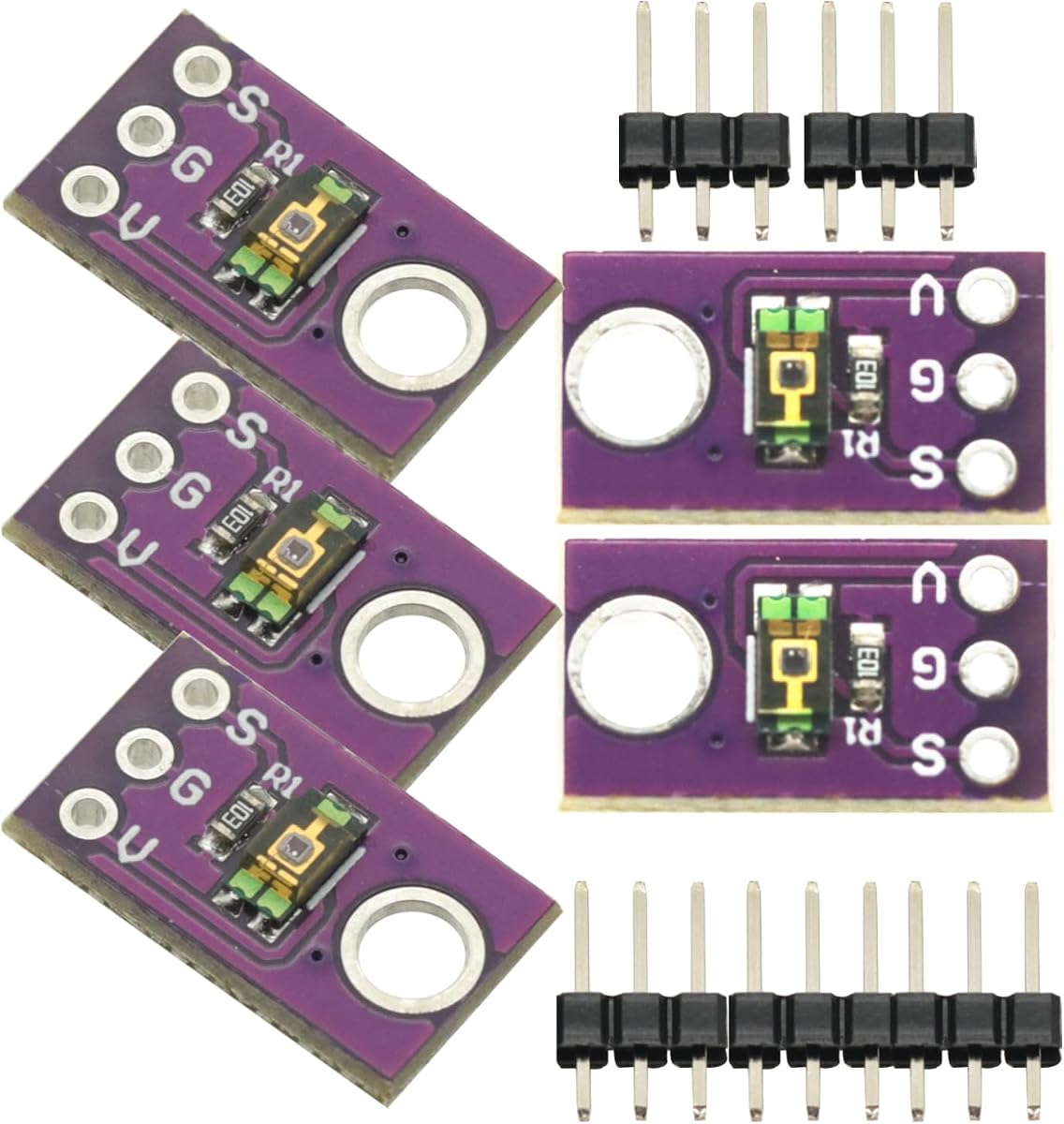
The TEMT6000 is a professional grade ambient light sensor designed for precise control. It excels in display backlight dimming and industrial lighting applications. Its accuracy surpasses basic photoresistors significantly.
We may earn a commission when you buy through this link, at no additional cost to you.
Users get five units which is perfect for prototypes needing multiple points. The sensor reads light intensity with high fidelity suitable for user experience adjustments. It works seamlessly with Arduino for automated brightness.
This sensor is more expensive but the performance justifies the cost for premium projects. It may require calibration for specific industrial setups. However for general use it is robust.
Best for commercial products or high fidelity prototypes. It ensures a polished user experience with automatic light management. We recommend it for premium electronics.
Ideal for controlling LCD and keypad brightness automatically.
Provides stable readings for industrial lighting tasks.
We may earn a commission when you buy through this link, at no additional cost to you.
The uxcell Photosensitive Diode module offers a compact solution for light intensity detection. It uses a stable LM393 comparator to ensure reliable switching. It is well suited for smart car applications and small electronics.
We may earn a commission when you buy through this link, at no additional cost to you.
The module supports both digital and analog outputs giving you flexibility. Voltage compatibility with 3.3V and 5V allows broad use. The three pack provides enough for typical small projects.
Its compact size is excellent for tight enclosures. The comparator chip adds robustness to the detection logic. Users appreciate the dual output options for mixed projects.
Recommended for smart devices and automotive electronics. It provides reliable detection in tight spaces. We suggest it for compact builds.
Fits easily into small automotive or device enclosures.
Uses LM393 for reliable signal processing and stability.
We may earn a commission when you buy through this link, at no additional cost to you.
Selecting the right light sensor depends on your specific project requirements and skill level.
There are mainly three types: photoresistors photodiodes and digital modules. Photoresistors are simple and cheap but lack precision. Photodiodes are fast and directional. Digital modules like BH1750 provide exact data.
Choose digital modules for precise control and photoresistors for simple triggers.
Sensors provide analog or digital outputs. Analog requires reading raw values and calibration. Digital outputs give simple HIGH/LOW signals or precise digital data over I2C.
Use digital for reliable data and analog for budget projects.
Ensure the sensor works with your board voltage. Arduino uses 5V while ESP32 uses 3.3V. Some modules support both but check the specs carefully.
Select wide voltage modules for flexibility across boards.
Some projects just need to know if it is light or dark. Others need exact lux values for dimming screens. Digital sensors are essential for high accuracy.
Prioritize high accuracy sensors for display or scientific use.
Buying in bulk often saves money. Many options come in packs of 3 6 or 30. If you have many projects a bulk pack is better.
Buy in packs to save costs and have spares.
Modules with bolt holes or small PCBs are easier to install securely. Standalone components need soldering and custom enclosures. Consider how the sensor will sit in your project.
Choose modules with mounting holes for stability.
Sensors with potentiometers allow threshold adjustments. This helps avoid false triggers caused by ambient fluctuations. Adjustable sensors offer more control over behavior.
Pick adjustable sensors for sensitive or automated tasks.
Some sensors detect light from all directions while others are directional. Directional sensors are best for beams or specific targets. Ambient sensors measure room light.
Select directional sensors for line following or security beams.
Connect the VCC and GND pins to your board power and ground. For analog sensors connect the AO pin to an analog input. For digital sensors connect DO to a digital input or SCL/SDA for I2C.
Write code to read the sensor values. Use analogRead for analog sensors to get a value from 0 to 1023. For digital sensors use the specific library provided to read light intensity directly.
Keep the sensor lens clean for accurate readings. Dust or fingerprints can block light and skew results. Regularly inspect the connections to ensure they remain secure and free from corrosion.
Analog sensors provide raw voltage values that require calibration and are great for simple tasks. Digital sensors output precise data values like lux making them easier to use for accurate applications. If you need exact measurements choose a digital module.
Many modules support both 3.3V and 5V but always check the voltage range. If the sensor requires 5V you must power it with 5V even if the microcontroller is 3.3V. The logic levels must match for safe operation.
LDRs are resistors that change resistance with light and are slow but cheap. Photodiodes are faster and produce a current proportional to light intensity. Photodiodes are better for precise and quick detection tasks.
Calibration involves reading values in light and dark conditions and setting thresholds in code. For digital modules calibration may not be needed as they provide standardized units. Use the potentiometer on analog modules to adjust sensitivity.
Yes most sensors listed work with Raspberry Pi as they support 3.3V and 5V logic. You will need to map the pins correctly and use Python libraries. Check the voltage compatibility before connecting.
Instability can be caused by loose connections or power fluctuations. Ensure wires are tight and use a stable power supply. Adjusting the threshold or averaging readings in code can also help stabilize the data.
We reviewed ten sensors ranging from basic bulk resistors to professional modules. Each offers unique benefits depending on your project needs and budget. The GY-302 and TEMT6000 stand out for precision while the bulk packs offer great value.
Prioritize accuracy and interface type when selecting a sensor. Digital modules save time and provide better data for advanced projects. If you are on a tight budget photoresistors work well for simple switching tasks.
Check current availability and pricing before purchasing. Prices and stock change frequently on online marketplaces. Always verify the voltage compatibility of your chosen sensor with your specific microcontroller board.