
SKLZ Speed Gates for Sports and Athletic Speed Training
3.6Editor score
Times runs up to 20 yards
Stores last 50 results
Includes carry bag for portability
This guide compares the top electronic sprint timing systems for athletes and coaches, evaluating accuracy, portability, and features to help you choose the
Selecting the right electronic sprint timing system is crucial for athletes and coaches seeking precise speed metrics. Modern systems use laser or radio frequency sensors to eliminate human error, providing reliable data for performance tracking and improvement over time.
We evaluated ten leading models based on accuracy, ease of use, battery life, and durability. Our analysis covers portable setups for field training as well as robust systems designed for competitive environments, ensuring a comprehensive overview for all training needs.
Each selection highlights unique strengths and potential limitations to help you make an informed decision. Prices and availability may change, so verify current details before purchasing. This guide aims to streamline your search for the perfect timing solution.
3.6Editor score

4.7Editor score

The following table provides a side-by-side comparison of all ten products, highlighting key specifications and features to help you quickly identify the model that best fits your specific training requirements and budget constraints.


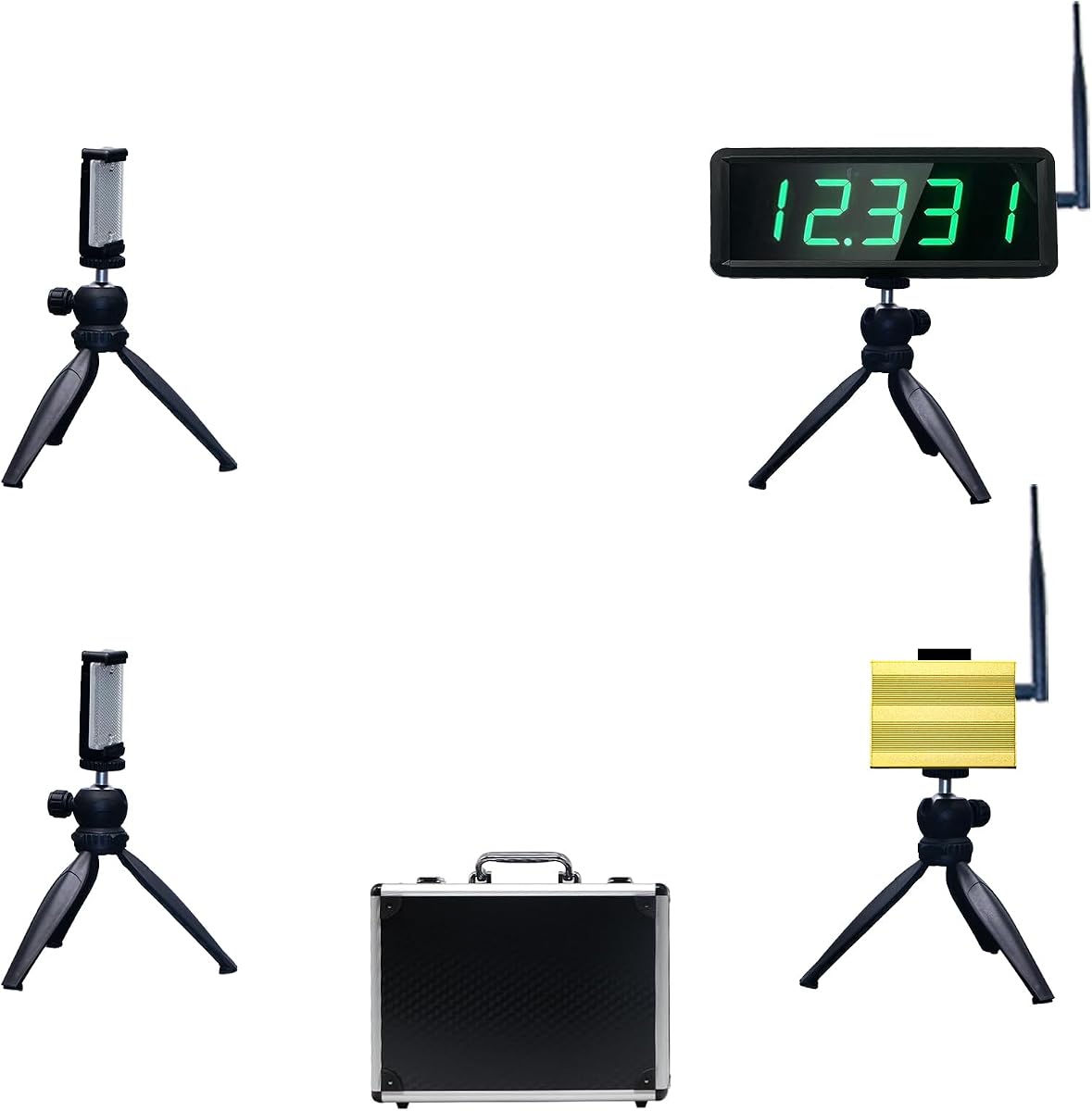


This wireless race clock stands out for its exceptional accuracy and versatility across various athletic disciplines. With a 4.7 rating, users appreciate its ability to time sprints, motorcycle races, and even pet training sessions effectively.
We may earn a commission when you buy through this link, at no additional cost to you.
The precision is unmatched, measuring times down to 0.001 seconds. Its wireless communication range extends up to 400 meters, allowing coaches to place the timer wherever needed without being tethered to the finish line.
While the tripod is smaller than some competitors, it remains stable for most drills. The battery life supports 8 hours of continuous use, making it reliable for full-day training camps without frequent recharging.
Athletes and coaches seeking a reliable, multi-purpose timing solution will find this system invaluable. It balances professional-grade features with portability, making it a top choice for serious training environments.
The 0.001-second accuracy ensures that even the smallest improvements in speed are captured, crucial for competitive athletes aiming to shave milliseconds off their times.
Beyond track and field, this timer supports motorcycle timing, kart lap timing, and skating, offering a unified tool for diverse training needs.
We may earn a commission when you buy through this link, at no additional cost to you.
The Speed Gates Pro utilizes radio frequency sensors to offer robust timing for sprints up to 50 yards. It is designed for agility training and dash testing where consistent sensor performance is key.
We may earn a commission when you buy through this link, at no additional cost to you.
Its memory function stores up to 50 recent times, allowing for immediate review and comparison without external devices. The rechargeable batteries reduce long-term costs associated with disposable alternatives.
Despite a lower rating, the included carry bag and portable design make it convenient for field use. The LED timer ensures visibility indoors and outdoors, supporting versatile training environments.
This system is best suited for teams needing a dedicated radio frequency solution for medium-distance sprints. It offers a balance of functionality and portability for regular training sessions.
Radio frequency sensors provide a stable connection that is less susceptible to light interference compared to optical systems, ensuring reliable timing in varied lighting conditions.
The included carry bag ensures all components are organized and protected, making it easy to transport the system between different training locations.
We may earn a commission when you buy through this link, at no additional cost to you.
This wireless laser timer stands out for its adjustable tripods, which extend up to 5.25 feet. It is designed for precise timing in various drills, ensuring the laser aligns correctly with athletes.
We may earn a commission when you buy through this link, at no additional cost to you.
The HD display is optimized for readability in bright sunlight, a common challenge for outdoor training. The chipset ensures high accuracy, while the alloy frame provides durability for frequent use.
Eliminating the need for a remote simplifies operation. Body buttons allow for quick start, stop, and reset functions. The battery supports 8 hours of continuous use with a portable carrying case included.
Coaches who prioritize height customization and durability will appreciate this model. It offers a robust solution for serious training environments where equipment reliability is paramount.
The ability to adjust tripod height ensures that the timing gates are positioned correctly for different athlete sizes and training drills, enhancing measurement accuracy.
Removing the remote requirement reduces the risk of losing control units and streamlines the setup process, allowing coaches to focus on the athletes.
We may earn a commission when you buy through this link, at no additional cost to you.
The Brower TCi represents the pinnacle of professional timing technology. It features redundant transmissions, sending start and finish signals up to 12 times to ensure no data is lost.
We may earn a commission when you buy through this link, at no additional cost to you.
Its 32 independent channels allow multiple systems to operate in close proximity without interference. This makes it ideal for large competitions where multiple lanes or stations are active simultaneously.
Wireless sync eliminates the need for cables between units, simplifying the setup process. Signal strength analysis provides additional diagnostic data, ensuring that all components are communicating effectively.
For institutions or organizations requiring the highest level of reliability and scalability, this system is unmatched. It justifies its cost through advanced features and robust performance.
By sending signals multiple times, the system minimizes the risk of missed starts or finishes due to environmental interference or technical glitches.
The ability to run 32 channels independently means that entire stadiums or tracks can be timed simultaneously without signal conflicts.
We may earn a commission when you buy through this link, at no additional cost to you.
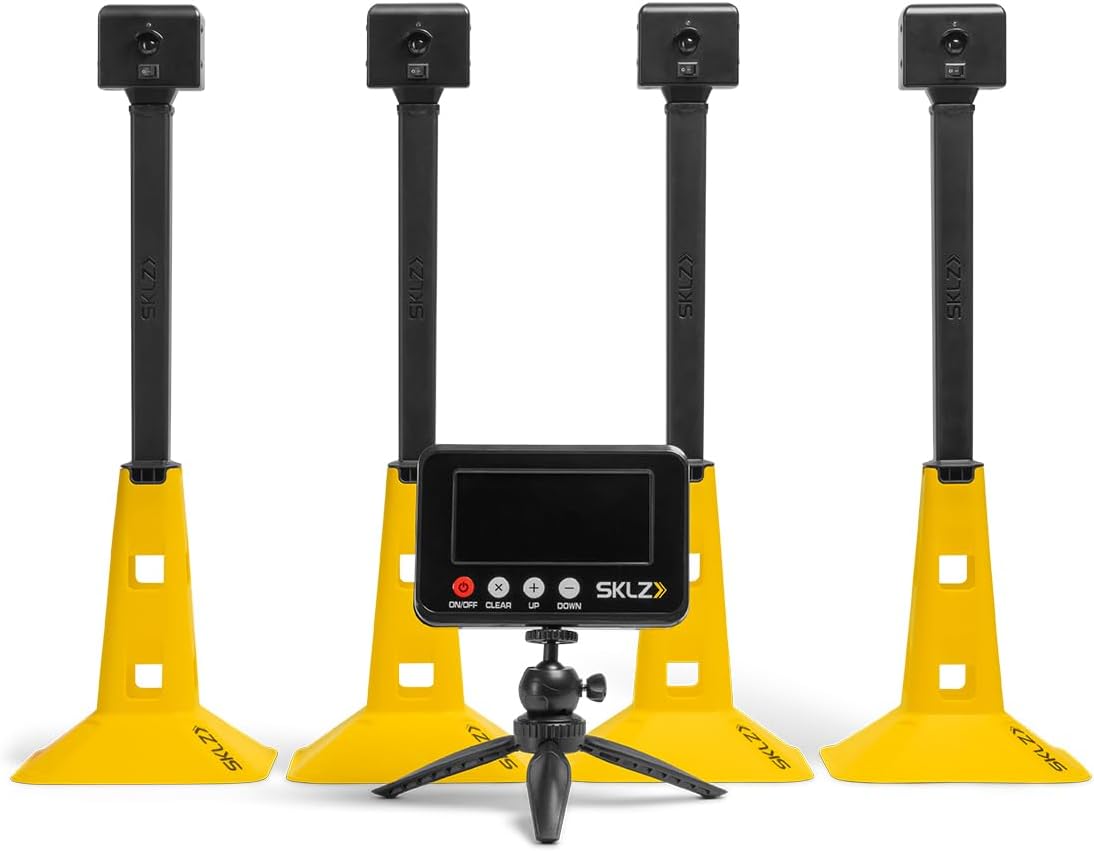
The SKLZ Speed Gates offer an accessible entry point into electronic timing. Designed for runs up to 20 yards, they are perfect for base-to-base sprints, football drills, and shuttle runs.
We may earn a commission when you buy through this link, at no additional cost to you.
The system stores 50 recent times, allowing coaches to track progress without external devices. LED indicators confirm sensor alignment quickly, reducing setup time and ensuring accuracy.
While it uses AA batteries, the complete kit includes everything needed to start. The carry bag ensures portability, making it easy to transport between the field and gym.
Teams on a budget seeking essential timing capabilities will find this kit valuable. It simplifies the process of tracking speed improvements without complex technical requirements.
The simple setup process with visual indicators means that anyone can start timing runs immediately without needing technical expertise or complex calibration.
Storing 50 results allows for direct comparison of athletes, facilitating data-driven coaching decisions and helping to identify improvement trends over time.
We may earn a commission when you buy through this link, at no additional cost to you.
The YZ Laser Timer combines precision with convenience. It offers accurate timing down to 0.001 seconds, making it suitable for competitive 40 or 60-yard dashes and lap times.
We may earn a commission when you buy through this link, at no additional cost to you.
Its battery life supports 10 hours of continuous use after a 4-hour charge. The toolbox packaging keeps all components organized, ensuring that nothing is lost during transport.
The five-digit display ensures clear readings, while the system supports various sports from running to football. It is a versatile tool for coaches needing reliable data.
For those seeking a straightforward, accurate timer without unnecessary complexity, this model is a strong contender. The packaging adds a layer of durability for frequent travel.
The toolbox packaging ensures that all parts are secured and easily accessible, reducing the risk of damage or loss during frequent transport between locations.
A 10-hour battery life means the timer can withstand full-day events or long training sessions without the need for frequent interruptions to recharge.
We may earn a commission when you buy through this link, at no additional cost to you.
This wireless timer offers six usage modes to suit various training scenarios, including lap time, interval, and sprint modes. It is designed for 40 and 60-yard dashes as well as cycling lap times.
We may earn a commission when you buy through this link, at no additional cost to you.
Accurate to 0.001 seconds, it provides reliable data for performance tracking. The flight case ensures all components are protected during transport, making it suitable for field use.
However, users must note that the product requires connection to the wireless antenna for use. The 7-hour battery life supports moderate use but may require charging for extended events.
Athletes seeking a versatile timer with multiple modes will find this system useful. It balances functionality with portability, though careful setup is required to ensure proper communication.
Six distinct modes allow the system to adapt to different types of training, from simple sprints to complex interval drills, enhancing its utility for diverse athletes.
The included flight case protects sensitive electronic components from damage, ensuring the system remains in good condition despite frequent handling and transport.
We may earn a commission when you buy through this link, at no additional cost to you.
This system focuses on precise timing for single athletes moving from start to finish. It uses infrared induction timing to detect movement, making it suitable for track, field, and even motorcycle racing.
We may earn a commission when you buy through this link, at no additional cost to you.
The wireless communication range is impressive at 500 meters, allowing for flexible placement. However, the effective laser distance is limited to 8 meters, requiring careful positioning for accurate timing.
Power is supplied via USB power banks, requiring three for operation. The simple plug-and-reset operation makes it user-friendly for those familiar with basic electronics.
Coaches working with single athletes or in environments requiring long wireless ranges will appreciate this model. It offers a balance of range and simplicity.
A 500-meter communication range allows the timer to be placed far from the start and end points, providing flexibility in how drills are structured.
The plug-and-reset design minimizes the technical knowledge required to operate the system, allowing coaches to focus on the athletes rather than the equipment.
We may earn a commission when you buy through this link, at no additional cost to you.
The TimeRider system delivers precise timing down to 0.001 seconds, ensuring reliable data for speed training. Its bright LED display is visible even under direct sunlight, making it suitable for outdoor use.
We may earn a commission when you buy through this link, at no additional cost to you.
An adjustable height stand fits all training scenes, allowing for customized setup. The dual power options, including rechargeable battery and plug-in power, provide flexibility and up to 10 hours of runtime.
The wireless design eliminates tripping hazards, a critical safety feature on the field. The portable storage case ensures easy transport to different locations without damage.
This system is a balanced choice for coaches needing reliable and flexible timing. It offers professional features in a user-friendly package.
The adjustable height stand ensures that the timing gates can be positioned optimally for athletes of different sizes, improving the accuracy of the measurements.
Eliminating wires through wireless design reduces the risk of tripping, ensuring that both athletes and coaches can move safely during training sessions.
We may earn a commission when you buy through this link, at no additional cost to you.
The Dashr 2.0 system offers three gates for advanced timing setups. It includes lasers, reflectors, and tripods, providing a complete kit for immediate use in professional environments.
We may earn a commission when you buy through this link, at no additional cost to you.
Its 5.0 rating reflects high user satisfaction with accuracy and build quality. The system is designed for high precision, ensuring that split times and total times are captured correctly.
Setup requires proper calibration of the reflectors, but the included accessories support this. It is a robust solution for teams needing multiple data points from a single run.
Coaches seeking a multi-gate system for detailed performance analysis will find this option valuable. It supports advanced training methodologies requiring precise split timing.
Three gates allow for tracking splits within a single run, providing detailed insights into acceleration and deceleration phases that single-gate systems cannot offer.
Having lasers, reflectors, and tripods included simplifies the purchase process and ensures all necessary components are compatible out of the box.
We may earn a commission when you buy through this link, at no additional cost to you.
Selecting the right electronic sprint timing system requires understanding your specific needs and the environment in which you will train. The following factors will help you evaluate options effectively.
The core function of any timing system is to measure time accurately. Look for systems that offer precision down to 0.001 seconds. This level of detail is essential for tracking incremental improvements in athletic performance. Without high accuracy, small gains may go unnoticed, leading to less effective training adjustments. Always check the technical specifications to ensure the claimed precision is supported by the hardware.
Prioritize systems with high-precision sensors and reliable data transmission to ensure your measurements are trustworthy.
Wireless capability allows for flexible placement of timing gates. A longer wireless range enables coaches to position the timer far from the starting point without cables. This is particularly useful for drills where the coach needs to be at a specific distance for observation. Check the maximum communication distance specified by the manufacturer to ensure it fits your training field or facility.
Choose a model with a range that exceeds your typical training distances to avoid connectivity issues.
Training sessions can last for hours, so a long battery life is crucial. Systems that offer 8 to 10 hours of continuous use reduce the need for frequent recharging. Rechargeable batteries are often more cost-effective than disposable ones over time. Ensure the battery is easy to charge and has a stable power source option if needed.
Opt for systems with extended battery life to support uninterrupted training sessions.
The display must be readable in various lighting conditions. LED displays with high brightness are essential for outdoor use in direct sunlight. A clear, flicker-free display ensures that coaches and athletes can see the time immediately after a sprint. This helps in providing instant feedback, which is critical for learning and adjustment.
Verify that the display is bright enough for outdoor visibility and easy to read from a distance.
If you travel between fields or gyms, the system must be portable. Look for models that come with a carry bag or case to protect components during transit. Durability is also key; rugged frames and weather-resistant materials will withstand the rigors of outdoor use. The weight of the device should not hinder easy transport.
Select a system with protective packaging and a lightweight design to make transport easy and safe.
Complicated setups can waste valuable training time. The best systems allow for quick assembly and intuitive operation. Features like one-button resets, automatic start/stop detection, and clear indicator lights simplify the process. A user-friendly interface ensures that the focus remains on the athletes rather than on troubleshooting the equipment.
Prioritize models with straightforward controls and minimal setup requirements to maximize training efficiency.
The ability to store times is vital for tracking progress. Systems that save 50 or more recent times allow for immediate review without external devices. This feature helps in comparing athletes side by side or reviewing personal bests quickly. Some systems may also offer connectivity to software for deeper analysis, but local memory is a minimum requirement.
Look for systems with ample memory capacity to ensure you can store and review past performances easily.
Cost is always a factor, but consider value over price. Basic systems may suffice for casual use, while competitive environments may justify higher investments for better accuracy and features. Avoid the cheapest options that compromise on essential specs like battery life or accuracy. A mid-range system often offers the best balance of features and cost.
Determine your budget range and balance it with necessary features to find the best value.
Start by fully charging the battery before your first use. Proper setup ensures the device is ready for accurate timing. Place the timing gates at the designated start and finish lines, ensuring they are stable and aligned correctly. For laser systems, ensure the reflectors are facing the sensor directly to avoid errors.
After each session, clean the sensors and displays with a soft cloth to remove dust and dirt. Store the components in the provided case to protect them from damage and environmental factors. Avoid leaving the device in extreme temperatures, as this can degrade battery performance and electronic components.
Regularly check for software updates if the device supports them. Updating firmware can improve accuracy and fix bugs. If you notice inconsistent timing, recalibrate the system or check the sensor alignment. Following these maintenance steps will extend the lifespan of your equipment and ensure consistent performance.
Systems like the 40/60 Yard Sprint Timer and the Brower TCi offer high precision down to 0.001 seconds. Accuracy depends on proper setup and sensor alignment. Generally, professional-grade models with redundant transmissions or laser technology provide the best results for competitive training.
Most modern systems provide between 7 to 10 hours of continuous use on a single charge. Some models also support plug-in modes for unlimited use during long events. Check the battery specifications of each model to ensure it meets your training duration needs.
Many newer models feature intuitive body buttons that eliminate the need for a separate remote. This simplifies operation and reduces the risk of losing the control unit. However, some high-end systems may include remotes for advanced features or remote start functions.
Yes, most electronic sprint timing systems are designed for both indoor and outdoor use. Look for models with adjustable sensitivity to handle indoor lighting conditions. LED displays are generally readable indoors, but ensure the sensors are protected from direct impacts.
Wireless ranges vary by model, typically between 100 to 500 meters. Some systems support longer distances for large fields. Ensure the chosen model's range exceeds the distance between your start and finish points to avoid signal loss during timing.
Yes, many systems are versatile and can time sprints, cycling, and skating. They often include modes for different types of runs. Check the product description to confirm compatibility with your specific sport to ensure the features match your needs.
We have reviewed the top electronic sprint timing systems available, highlighting the 40/60 Yard Sprint Timer for overall value, the SKLZ Speed Gates for budget-friendly use, and the Power Systems Brower TCi for professional reliability. Each model offers unique strengths depending on your specific training environment and requirements.
When choosing, prioritize accuracy and battery life to ensure consistent performance. Consider the wireless range and portability if you move between locations. A system that is easy to use will save you time and allow you to focus on the athletes.
Remember that prices and availability can change. Always verify the current details and read recent reviews before purchasing. With the right system, you can track progress accurately and help athletes achieve their speed goals.